It's Not the Goggles: The Real Reason You're Swimming Blind at Race Time
Every swimmer has been there. You've tested your goggles a dozen times in warmup. The seal is solid. You press them in one last time on the block, the starter beeps, and somewhere around the 50-meter mark, cold water starts creeping in around the left lens. By the time you hit the wall, you're half-blind and completely thrown off your race plan.
So you blame the goggles. Maybe you swap brands. Maybe you spend another $40 on a pair that promises a better seal. And then it happens again.
Here's the thing: the goggles probably aren't the problem. What's actually going wrong is happening a few inches north of the lens — in the way your head moves, tilts, and tenses up the moment competitive pressure kicks in.
Why a Perfect Warmup Seal Doesn't Guarantee Anything
Goggles create a seal through a combination of suction, gasket compression, and consistent surface contact with the skin around your eye socket. In practice, when your effort level is moderate and your body is relaxed, the geometry of your head stays relatively stable. Your neck muscles aren't firing hard, your jaw isn't clenched, and your skull isn't shifting around much during each stroke cycle.
Race pace changes all of that.
When you're pushing near-maximal effort, a whole cascade of compensatory muscle activity fires through your upper body. Your traps engage harder. Your neck rotates with more force during the breathing stroke. Your jaw tightens. Some swimmers even unconsciously lift their chin slightly when they're suffering — a throwback to the instinct to keep your airway above the surface. All of these micro-movements alter the shape of the tissue around your eye socket just enough to break the seal that felt bombproof 20 minutes earlier.
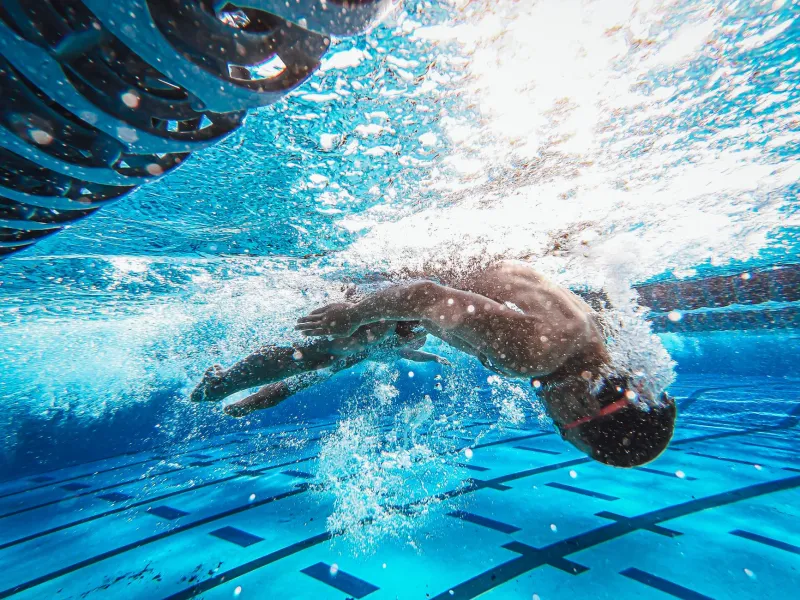
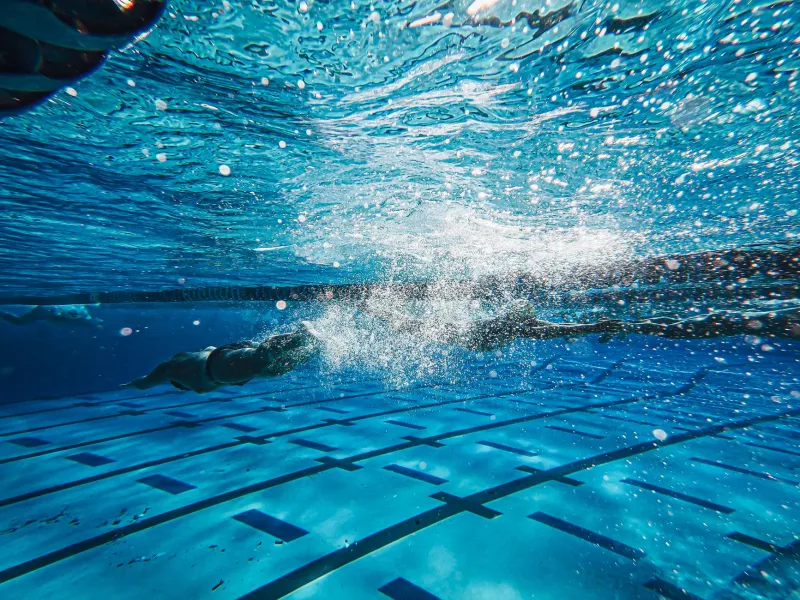
This isn't speculation. Competitive swimmers who've been filmed underwater during time trials versus easy swims show measurable differences in head position across stroke cycles. The head moves more, tilts at slightly different angles, and returns to a less neutral position with each breath. That variability is enough to compromise a goggle seal, especially during the breathing stroke itself — which is, of course, exactly when your face is closest to the water surface and most vulnerable to a leak.
The Breathing Stroke Is Ground Zero
If you pay attention to when your goggles actually start to flood, you'll almost always find it's during or right after a breath. That's not a coincidence. The rotation required to get your mouth clear of the water creates a lateral tilt in your skull, and if your neck is tense or your rotation is slightly off-axis — which it often is when you're fatigued — the gasket on one side of the goggle lifts away from your skin just enough to let water in.
It's a tiny gap. We're talking millimeters. But that's all it takes.
Swimmers who breathe bilaterally tend to report fewer one-sided leaks than those who breathe exclusively to one side, partly because bilateral breathing encourages more symmetrical neck mechanics. But even bilateral breathers can run into trouble when they start overreaching on the rotation or lifting their head forward instead of rotating cleanly around a neutral axis.
Neck Tension as the Hidden Variable
Here's what most swimmers never consider: neck tension doesn't just affect your hydrodynamics. It physically changes the contours of your face.
When your sternocleidomastoid and surrounding neck muscles contract hard — which they do under race-level effort — they pull on the skin and underlying tissue around your temples, jaw, and orbital area. If your goggles fit well on a relaxed face, they may not fit the same way on a face that's bracing against the water at race pace. This is especially noticeable in swimmers who tend to clench their jaw or press their lips together tightly when they're working hard.
One quick test: put your goggles on normally, then clench your jaw as hard as you can. Notice any change in how they feel around the edges? For a lot of swimmers, that clenching alone is enough to shift the seal.
Drills to Build Consistent Head Position Under Pressure
The fix isn't a new pair of goggles — it's training your head and neck to stay consistent even when the rest of your body is screaming.
Race-Effort Breathing Drills Do a set of 25s or 50s at true race pace, but focus entirely on keeping your head rotation smooth and controlled. Use a tempo trainer if it helps. The goal is to identify the moment your breathing mechanics start to break down and build awareness around it. Awareness is the first step toward correction.
Jaw Release Cues Practice deliberately relaxing your jaw on every breath. This sounds simple, but it takes repetition to override the tension habits that show up under pressure. Some coaches cue swimmers to imagine holding a grape between their back teeth — enough to keep the jaw slightly open without clenching.
Neutral Head Tempo Sets Swim a set where your only focus is keeping your eyes pointed straight down at the bottom of the pool except during the breath. No chin lift, no forward head creep. This reinforces the neutral neck position that keeps your goggle contact area stable throughout the stroke cycle.
Video Review at Race Pace If your club has underwater camera access, use it. Have someone film you during a hard effort set and compare your head position frame by frame during easy swimming versus race-pace intervals. The differences are often surprising and immediately actionable.
Getting the Fit Right in the First Place
None of this means fit doesn't matter — it absolutely does. If your goggles are already marginal in practice, any race-day movement is going to push them over the edge. Make sure you're fitting your goggles on a neutral, relaxed face, and do a few race-pace stroke cycles in warmup to stress-test the seal before you step on the block.
Also worth noting: goggles that fit well with dry hair on deck may fit slightly differently once your skin is fully hydrated and your face has been in the water for an extended warmup. Always finalize your seal adjustment in the water, not on the pool deck.
The Bigger Picture
Leaky goggles feel like a gear problem, and that framing is convenient because gear problems are easy to fix. You just buy something different. But if the root cause is a biomechanical pattern — tension-driven head movement under competitive pressure — no amount of equipment swapping is going to solve it.
The swimmers who stop fighting their goggles are usually the ones who've done the work to understand what their body is actually doing at race intensity. That kind of self-awareness takes time and deliberate practice, but it pays off in ways that go well beyond keeping water out of your eyes. Cleaner head position means better hydrodynamics, more efficient breathing, and less wasted energy fighting your own body down the lane.
So the next time your goggles flood mid-race, resist the urge to blame the product. Ask yourself what your neck was doing at that moment. Chances are, that's where the real answer lives.