Slow Down to Speed Up: The Wall Paradox Every Competitive Swimmer Needs to Understand
Every swimmer who's ever stared at a pace clock knows the feeling. You hit the wall hard, spin fast, push off — and then watch your split come back a half-second slower than expected. So you work the turns even harder in practice. You drill them obsessively. You shave milliseconds off your touch-to-push time. And somehow, the splits still don't move.
Welcome to the flip turn paradox.
The uncomfortable truth is that a faster turn doesn't automatically produce a faster split. In fact, for a huge percentage of competitive swimmers — from club-level age groupers to college athletes — the relentless pursuit of a quicker turnaround is actively costing them time. Not on the wall. In the water.
The Wall Isn't the Problem You Think It Is
Here's the thing about a flip turn: the rotation and touch phase is actually the smallest variable in the equation. Most swimmers complete the flip itself in somewhere between 0.3 and 0.6 seconds. That's the window everyone's obsessing over. But what happens in the 10 to 15 meters after the push-off? That's where races are actually decided.
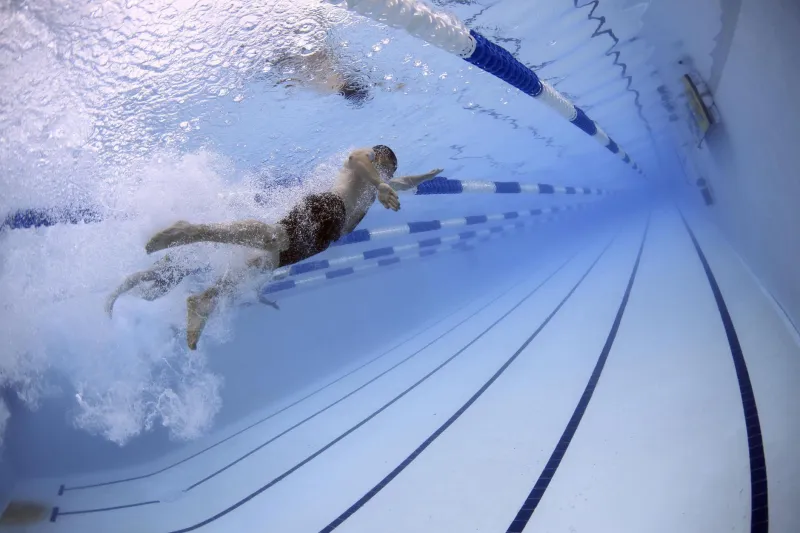
After a legal push-off, a swimmer can travel underwater at speeds that are genuinely faster than anything their freestyle stroke can generate at the surface. We're talking about a brief but significant window — typically 5 to 7 meters, sometimes stretching to 12 or more for elite swimmers — where hydrodynamic efficiency is at its absolute peak. No stroke resistance, no surface drag, just clean water and momentum.
Rush the turn, and you compress or destroy that window entirely.
What "Rushing" Actually Does to Your Physics
When a swimmer panics into a faster rotation, a few things tend to go wrong simultaneously.
First, the feet land on the wall in a compromised position. Maybe they're too high, too low, or slightly off-center. That means the push-off angle isn't optimized — and an off-angle push sends the swimmer toward the surface faster than necessary, cutting the underwater phase short.
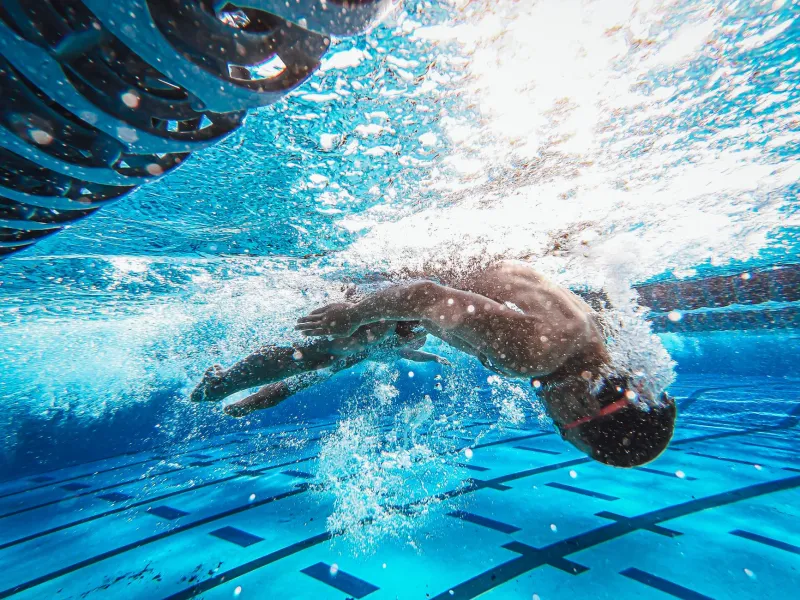
Second, the body never fully loads into streamline before the push. The arms aren't locked, the core isn't braced, the head position is already drifting. So instead of a tight, torpedo-like shape launching off the wall, you've got a vaguely streamlined blob that starts decelerating almost immediately.
Third — and this one's subtle — the swimmer's lungs are often in the wrong state. A rushed turn can mean exhaling at the wrong moment or holding tension in the chest and shoulders, both of which create drag and reduce the clean, flat body position that makes underwater swimming so fast.
The result? You saved maybe a tenth of a second on the wall and gave back four times that in the breakout.
How Elite Swimmers Actually Think About Turns
Spend any time watching footage of elite-level swimmers — think Olympic trials heats or NCAA championships — and you'll notice something counterintuitive. The fastest swimmers in the water don't always have the fastest-looking turns. What they have are controlled turns.
There's a deliberate quality to how top-tier swimmers approach the wall. The approach is timed precisely so the flip begins at the right distance — not too far out, not crammed into the tile. The rotation is efficient but not frantic. And critically, there's a moment — barely perceptible, but real — where the swimmer sets their feet before driving off.
That brief settling moment costs maybe a tenth of a second in raw turn time. What it buys is a clean, powerful push-off at the right angle, into a locked streamline, with the momentum directed exactly where it needs to go.
The breakout that follows can hold peak speed for two to three additional meters compared to a rushed alternative. Over a 200 freestyle — seven turns — that's potentially a second and a half of free speed.
The Deceleration You Don't See Coming
There's another layer to this that doesn't get talked about enough: the approach deceleration problem.
Many swimmers, especially those who've been drilled to "attack the wall," actually slow down in the final stroke cycle before the turn. They're so focused on getting the rotation right that they unconsciously back off their stroke tempo or shorten their pull. By the time they hit the wall, they've already bled speed — and no amount of fast rotation recovers that lost momentum.
The approach to the wall should be fast. Not reckless, but genuinely fast. The last stroke into the turn should be a full, committed pull. That's what feeds the flip with real velocity and transfers into the push-off. A slow approach into a fast rotation is still a slow turn.
Practical Fixes You Can Take to Practice Tomorrow
If any of this resonates, here's where to start.
Count your strokes into the wall. Inconsistent stroke counts mean you're improvising your approach every single turn. Pick a number, drill it, own it. Consistency is the foundation.
Prioritize push-off angle over rotation speed. During drill sets, slow the flip down slightly and focus entirely on where your feet land and what direction you're pushing. Film yourself from the side if you can — most swimmers are shocked by how shallow or steep their actual push-off angle is.
Extend your streamline hold. After every push-off in practice, consciously hold streamline for one count longer than feels natural. This builds the habit of staying underwater and trains your body to stay patient with the breakout timing.
Practice controlled breathing into turns. Know exactly when you're exhaling relative to your flip. Erratic breathing patterns create inconsistent body tension, which wrecks streamline without you ever realizing it.
The Bigger Picture
Swimming rewards patience in places where instinct says to go harder. The flip turn is one of the clearest examples of that principle in the entire sport. The wall isn't a place to win time — it's a place to protect the speed you've already built and set up the fastest possible underwater phase.
That tenth of a second you're trying to shave off your rotation? It might be worth a lot more left on the table if it means your next 15 meters are cleaner, faster, and more efficient.
Train the turn smart. The splits will follow.