Tight Is Slow: What Your Underwater Streamline Is Actually Costing You
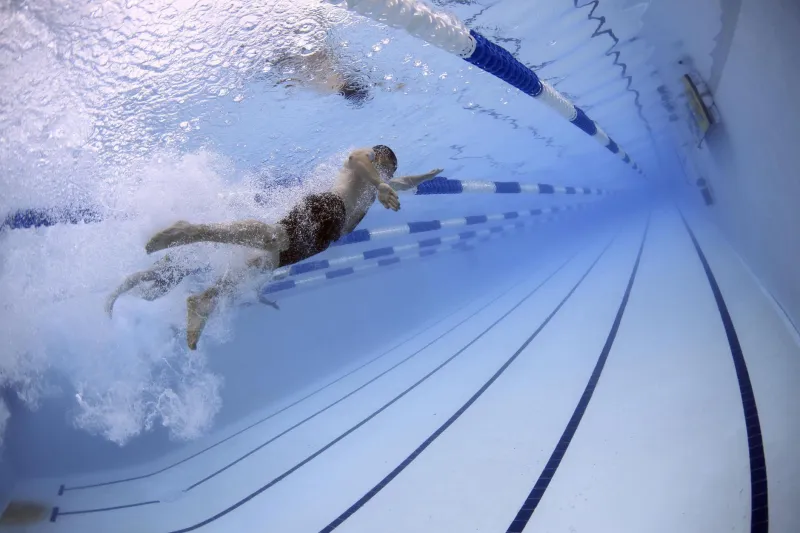
Ask any age-group coach what they want to see off the wall and you'll get the same answer every time: tight streamline, arms squeezed overhead, body locked like an arrow. It's practically gospel in American swim programs. And honestly? It's not wrong — up to a point.
The problem is that most swimmers take "tight" to mean "as tense as humanly possible." They white-knuckle their hands together, clench their glutes like they're bracing for impact, and hold their breath with the kind of full-body rigidity that would impress a statue. They think they're being disciplined. What they're actually doing is turning themselves into a slow, oxygen-burning anchor.
Here's the uncomfortable truth: for a lot of competitive swimmers, the streamline isn't the advantage they think it is.
What "Good" Streamline Actually Means
Let's get the mechanics straight first. A proper streamline is about shape, not force. The goal is to minimize your frontal cross-section — reduce the surface area your body presents to oncoming water — so you can glide through the resistance with as little drag as possible. That requires alignment: ears covered, spine neutral, hips level, legs together.
What it does not require is maximum muscular contraction across every square inch of your body.
When you over-tense during the underwater phase, a few things happen that work directly against your speed. First, your body loses its natural hydrodynamic shape. Muscles that are forcefully contracted tend to create subtle postural distortions — a slightly elevated shoulder here, a micro-arch in the lower back there. These small deviations are enough to increase drag in a meaningful way at competitive speeds.
Second — and this is the part coaches don't talk about enough — you're burning through your oxygen reserves at an accelerated rate. Muscular tension demands oxygen. The more of your body you're actively contracting during those three to five seconds underwater, the more anaerobic debt you're accumulating before you've even taken your first stroke. That's a terrible trade.
The Rigidity Paradox
There's a concept in sports science sometimes called the rigidity paradox: in many athletic movements, the harder an athlete tries to create control through tension, the less efficient their movement actually becomes. You see it in sprinters who over-grip the track, in baseball hitters who choke up too hard, and yes — in swimmers who try to force a perfect streamline.
Elite swimmers have a different relationship with the underwater phase. Watch slow-motion footage of a top-tier NCAA or Olympic-level swimmer coming off a turn and you'll notice something that looks almost casual about the way they move through the water. There's alignment, yes. But there's also a kind of fluid give to it — a subtle, dynamic quality that's hard to describe until you know what you're looking for.
What you're seeing is intentional relaxation within structure. These athletes have learned to maintain the geometric shape of a streamline while releasing unnecessary muscular tension. Their hands are pressed together but not strangled. Their core is engaged but not braced. Their legs are connected but not fused. The result is a body that moves with the water rather than fighting it.
Micro-Movements and Why They Matter
Here's where it gets interesting. Some research into elite underwater dolphin kicking has pointed to the role of what you might call micro-movements — tiny, almost imperceptible adjustments swimmers make during the glide and kick phases that help them stay "live" in the water rather than stiff.
Think of it like the difference between a dead fish and a live one. A dead fish sinks. A live fish makes constant small corrections that keep it in motion. Elite underwater swimmers aren't rigid projectiles; they're dynamically balanced athletes making real-time adjustments to their position and momentum.
This doesn't mean you should be wiggling around underwater like you're trying to escape a bear hug. It means that a small degree of responsive movement — adjusting head position slightly, allowing the hips to track naturally with the kick — is actually more efficient than trying to hold a static, locked position.
How to Practice the Difference
So how do you actually train this? A few practical approaches:
The squeeze test. On your next practice set, push off the wall and rate your overall body tension on a scale of one to ten. Most swimmers who try this honestly will land somewhere between seven and nine. The goal is to get to a four or five — enough engagement to maintain shape, not so much that you're fighting yourself. It feels weird at first. That's normal.
Hands-focus drill. Isolate your hand position. Instead of squeezing your palms together as hard as you can, press them together with just enough pressure to hold a sheet of paper. Keep the hands overlapping and flat, but remove the death grip. See if your glide distance changes. For most swimmers, it does — and not in the direction they expected.
Timed underwater distance. Use a tempo trainer or have a teammate clock your underwater distance on pushoffs at different tension levels. Go full rigid on one rep, intentionally relaxed-but-aligned on the next. Compare. Data beats theory every time.
Breath timing awareness. Start paying attention to how much air you've burned by the time you surface. If you're coming up already feeling the edge of oxygen debt, your underwater tension is likely a contributing factor. A relaxed, efficient streamline should leave you with more left in the tank as you take that first stroke.
Rethinking What "Strong" Looks Like Underwater
There's a cultural thing in American swimming where toughness and tension get conflated. Grinding through a set, holding that brutal streamline, squeezing every muscle until your hands shake — it looks like hard work. It feels like discipline. And sometimes that framing is useful for building mental toughness.
But when it comes to actual race-day performance, looking tough and moving fast are not the same thing. The swimmers who consistently get the most out of their underwater phases aren't the ones trying the hardest to look perfect. They're the ones who've internalized the difference between structure and strain — and learned to use only as much tension as the job actually requires.
Loosen the grip. Keep the shape. Let the water do some of the work.
That's not a shortcut. That's elite-level swimming.