When the Pool Stops Protecting You: Building Real Confidence for Open Water Racing
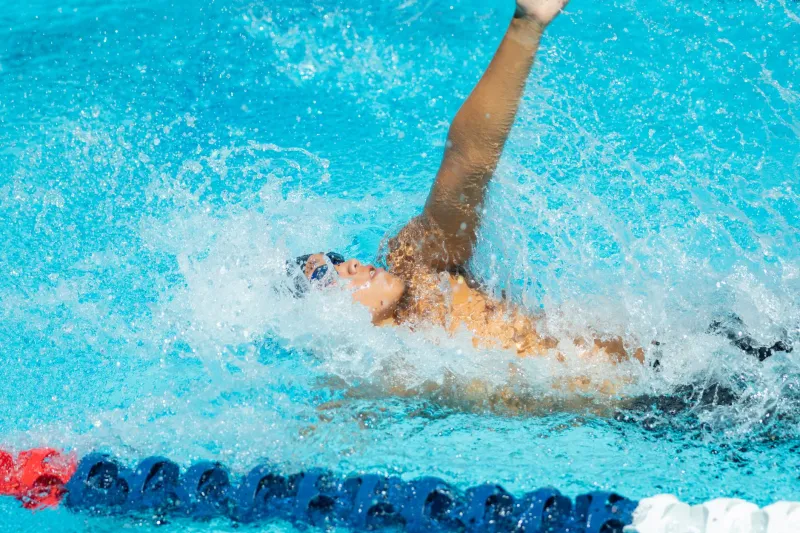
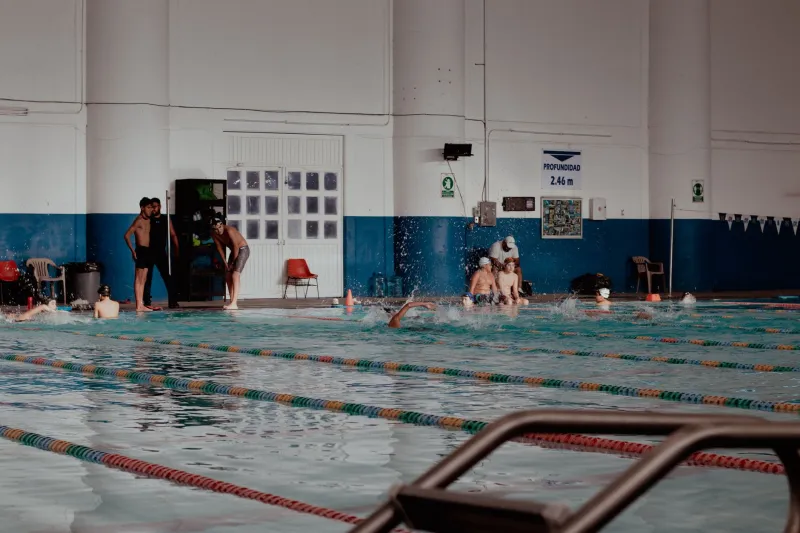
The pool is a controlled environment. That's exactly what makes it great for developing technique, fitness, and speed — and exactly what makes it a terrible preparation for the chaos of open water racing.
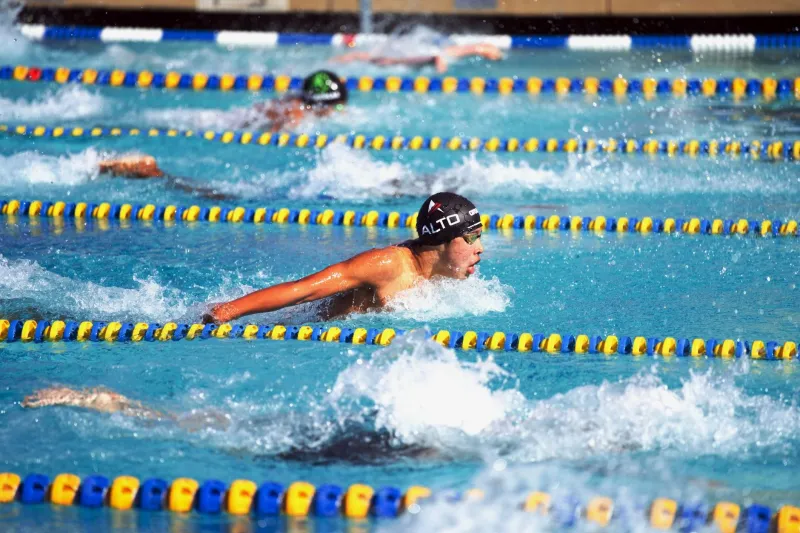
Every black line, every lane rope, every predictable flip turn is a form of structural support that pool swimmers lean on without realizing it. Take those away and put a swimmer in a lake in Ohio, a bay in San Diego, or a reservoir in Colorado at 6 a.m. with 300 other bodies competing for the same water — and even genuinely talented swimmers can come completely unglued.
This isn't a fitness problem. It's a resilience problem. And it's one that can be built — but only if you're honest about what you're actually dealing with.
The Shock Is Real, and It's Not Weakness
Let's start here, because a lot of pool swimmers who struggle in open water spend the first few races convinced something is physically wrong with them. Their times are off. They feel panicked in ways they can't explain. They surge and slow erratically. They finish exhausted in ways that don't match their fitness level.
What they're experiencing is cognitive overload. In the pool, your brain operates on autopilot for most of the race — the environment is so predictable that your working memory is almost entirely freed up for effort management. In open water, your brain is suddenly handling navigation, crowd contact, temperature sensation, sighting decisions, wave management, and the absence of every familiar landmark, all simultaneously.
That cognitive load has a direct physiological cost. It elevates heart rate, disrupts breathing rhythm, and degrades stroke mechanics — not because you're unfit, but because your mental bandwidth is maxed out.
Recognizing this is the first step. You're not falling apart. You're just running software in an environment it wasn't optimized for. Yet.
Sighting: The Skill That Breaks Everything Else
For most pool-to-open-water transitions, sighting is where the wheels fall off first. In a pool, you never look up. Your head stays neutral, your hips stay high, your stroke stays efficient. In open water, you have to lift your head periodically to locate buoys, adjust your line, and avoid obstacles — and every time you do it wrong, you pay for it with wasted energy and lost time.
The fix isn't just learning the mechanical technique of sighting (lift eyes before breathing, not instead of breathing — that part matters). The fix is practicing sighting until it becomes automatic enough that it stops consuming conscious attention.
If your pool has a lane rope or a mark on the far wall, you can practice this indoors. Build sighting into your regular training sets — every fourth or sixth stroke, lift your eyes and locate a target. Do it until it feels like part of your stroke rather than an interruption to it. When it stops feeling weird in the pool, it'll stop breaking your rhythm in open water.
Temperature, Wetsuit, and the Unfamiliar Body
Another underestimated disruptor: cold water and wetsuit buoyancy change how your body feels in the water in ways that are genuinely disorienting if you've never experienced them.
A wetsuit shifts your center of buoyancy, changes your kick mechanics, and alters your stroke timing. Cold water tightens muscles, affects breathing, and triggers a stress response that can spike perceived effort even at moderate paces. If the first time you experience either of these is on race morning, you're going to spend the first 400 meters of your race just trying to figure out what's happening to your body — and that's 400 meters of compromised performance.
The solution is exposure. Get in cold water before race day. Swim in your wetsuit before race day. Multiple times. Until the novelty wears off and your nervous system stops treating it as a threat.
Mental Frameworks That Hold Up in Chaos
Beyond the physical adjustments, open water racing requires a different mental operating system than pool racing. Here are a few frameworks that elite multi-sport and open water athletes use to stay grounded when conditions get rough.
Process anchoring. When the environment becomes overwhelming, narrow your focus to something you can directly control — stroke rate, breathing pattern, body position. Pick one and use it as an anchor when your brain starts spiraling about navigation, contact, or pace. You can't control the chop. You can control your catch.
Pre-race environmental exposure. Arrive early on race day and get in the water before the gun. Even a five-minute warmup in the actual race environment dramatically reduces the novelty response during the race itself. Your nervous system gets a preview, files it as "known," and stops treating it as an emergency.
The reframe from hostile to interesting. Elite open water swimmers often describe their relationship with difficult conditions in terms of curiosity rather than threat. Choppy water isn't something happening to them — it's a variable they're navigating. That subtle shift from victim to problem-solver keeps the prefrontal cortex online and the panic response offline.
Simulation training. If you have access to any open water before your race, use it. If you don't, create pool-based simulations — no walls for 500 meters, sighting every few strokes, swimming with a group rather than in a lane. The more your training looks like your race, the less your race will look like a crisis.
The Forged Confidence
The title of this piece uses the word "forge" deliberately — because the confidence that holds up in open water isn't given, it's built through repeated exposure to discomfort and the discovery that you survive it.
Every cold water swim you do before race day is a data point your brain files as evidence. Every sighting drill that goes awkward and then improves is proof that adaptation is happening. Every chaotic mass start you practice in a group training session is one less thing that will feel alien when the gun goes off.
Pool speed is real. Pool fitness is real. But the swimmer who dominates open water isn't always the fastest pool swimmer in the field — it's the one who showed up to the uncontrolled environment already having made peace with the chaos.
Forge that peace before race day. The water will test it regardless.