No One to Chase: The Hidden Cost of Swimming Every Lap Alone
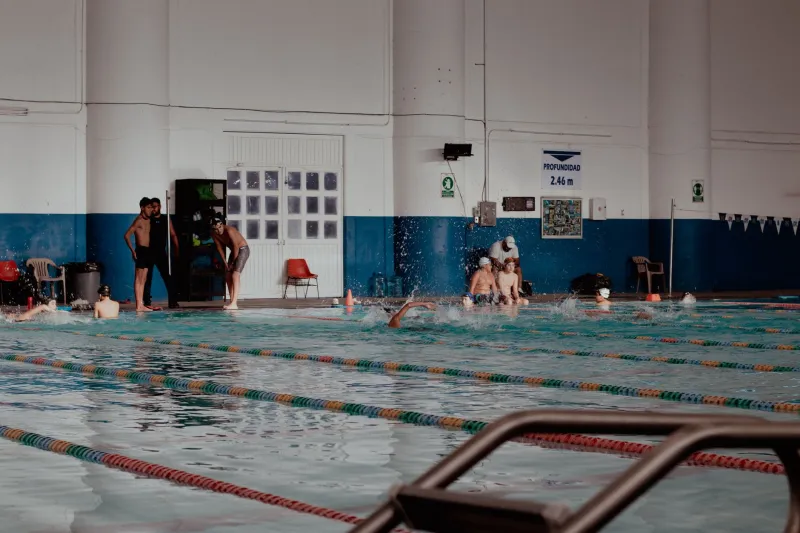
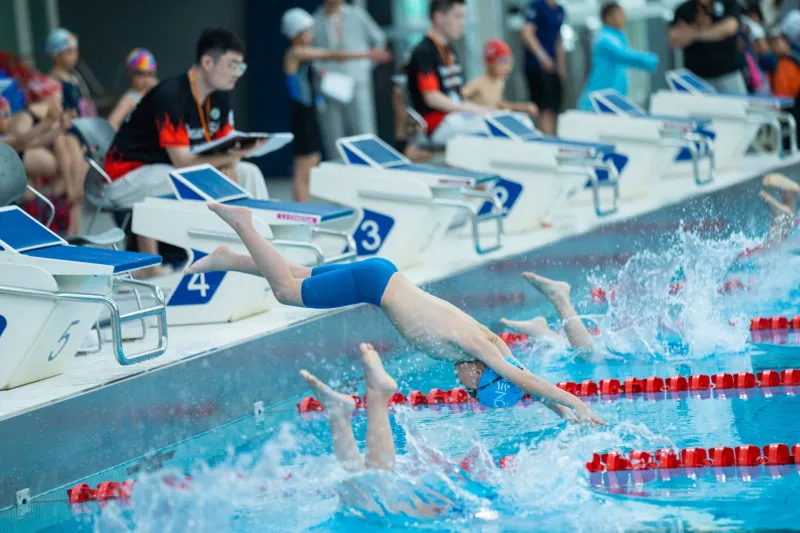
There's something appealing about owning the lane. No one cutting you off mid-set, no weird smell from the guy two lanes over, no coach yelling split times when you're already dying. Just you, the water, and your workout. Clean, controlled, autonomous.
Except there's a problem — and it's costing you more than you probably realize.
Swimmers who train alone consistently underperform their potential, not because they lack discipline or work ethic, but because the human body and mind are wired to respond to other humans. Strip that away, and you're not just training solo. You're training with one hand tied behind your back.
Your Brain Has a Pace-Setting Problem
Here's something coaches have known for decades that exercise science has finally caught up to: people don't push themselves as hard as they think they do when no one is watching.
This isn't a character flaw. It's biology. Your brain is constantly negotiating between effort and preservation, and without an external reference point — another swimmer pulling ahead, a teammate gasping beside you, a lane full of people who are all suffering the same set — your nervous system quietly settles for comfortable. You think you're at a nine. You're probably at a seven.
Researchers call this the Köhler effect, and it plays out in pools every single day. When you train alongside others of similar or slightly superior ability, your output goes up — not because you consciously decide to try harder, but because your brain recalibrates what "hard" actually means. You borrow their ceiling and make it your own.
Solo swimmers never get that recalibration. Every hard set is self-referential. And self-referential effort almost always plateaus.
Shared Suffering Isn't Just Motivational Fluff
There's a reason military units, college swim programs, and elite training groups all build culture around shared pain. It's not tradition for tradition's sake — it's a delivery mechanism for breakthroughs that simply don't happen in isolation.
When you're grinding through a brutal lactate set and the swimmer next to you is visibly hurting just as much as you are, something shifts. The discomfort stops feeling like a personal crisis and starts feeling survivable. Manageable. Even motivating. That psychological reframe — from "why is this happening to me" to "we're all in this" — directly affects how long and how hard you can sustain effort.
This matters physiologically, not just emotionally. The point at which you back off during a hard effort is heavily influenced by perceived exertion, not just actual physical limitation. Change the perception — which group training does automatically — and you change the outcome. You go harder, longer, more often. Over months and years, that compounds into a completely different athlete.
Solo training, by contrast, reinforces your existing relationship with discomfort. Whatever your current threshold is, it tends to stay there.
Accountability Is a Performance Drug
Let's talk about what happens when your alarm goes off at 5:15 AM and it's 28 degrees outside and your pool bag is still damp from yesterday.
If you train alone, the math is simple: no one will know. You can push the workout to afternoon, cut it short, or skip it entirely. Your training log won't judge you. The pool will be there tomorrow.
If you train with a group — especially a group that's competitive and tight-knit — that calculus changes completely. Your absence is noticed. Your effort is witnessed. Your splits are compared. That social pressure, which can feel uncomfortable to admit, is actually one of the most powerful training tools available to any athlete.
This isn't about shame. It's about commitment architecture. Humans follow through at dramatically higher rates when other people are involved. Building your training around a team or a consistent training partner doesn't make you dependent — it makes you consistent. And consistency, over any other single variable, is what actually makes swimmers faster.
Why Even Elite Soloists Eventually Come Back to the Pack
Here's the tell: watch what happens when serious solo swimmers prepare for major competitions. Almost universally, they seek out group environments in the final weeks before a big race.
Some join training camps. Others temporarily plug into a club program. A few call up old teammates and arrange informal group sessions. They do this because they know, even if they don't always articulate it, that something happens in a competitive group that they cannot manufacture on their own.
The intensity is different. The simulation of race-day pressure is different. The mental sharpness that comes from being around athletes who are also peaking — it's different. You can't fake it with a playlist and a pace clock.
If the most disciplined solo athletes in the sport still need group energy to find another gear before their biggest moments, that tells you something important about where real performance gains live.
What Solo Swimmers Can Do Right Now
None of this means you have to abandon your independent training entirely. Plenty of swimmers don't have access to a full club program, and there's real value in owning your schedule. But there are ways to inject group dynamics into your training without overhauling everything.
Find one consistent training partner. Even a single other swimmer changes the dynamic. Pick someone who's slightly faster in your weakest event. That gap will do more for your development than any interval table you can design alone.
Join a masters swim program, even part-time. USA Swimming's Masters program has clubs in almost every state, and most are genuinely welcoming to competitive swimmers of all backgrounds. Two or three group sessions per week, mixed with your solo work, can be enough to break the self-referential effort loop.
Use virtual competition. Some swim clubs now share training sets and split data through apps, creating a loose form of remote group accountability. It's not the same as lane-sharing, but it's better than nothing.
Schedule group training before peak events. Even if you train alone most of the year, build in two to three weeks of group training before your most important competitions. Treat it like a training camp. Your body and your brain will respond.
The Lane You're Missing
There's no shame in being a solo swimmer. It takes real discipline to show up day after day with no one watching. But discipline alone doesn't create peak performance — environment does. And the environment that produces the fastest, most resilient swimmers is almost always one that involves other people.
The ceiling you've been bumping against? It might not be a fitness problem. It might be a people problem.
Find your pack. Chase someone. Let yourself be chased. That's where the next level actually lives.