Racing Ghosts: Why Training Solo Against the Clock Is Quietly Destroying Your Competitive Edge
You nail the 1:52 in practice. Every. Single. Time. Coach is happy. Your watch confirms it. You feel ready.
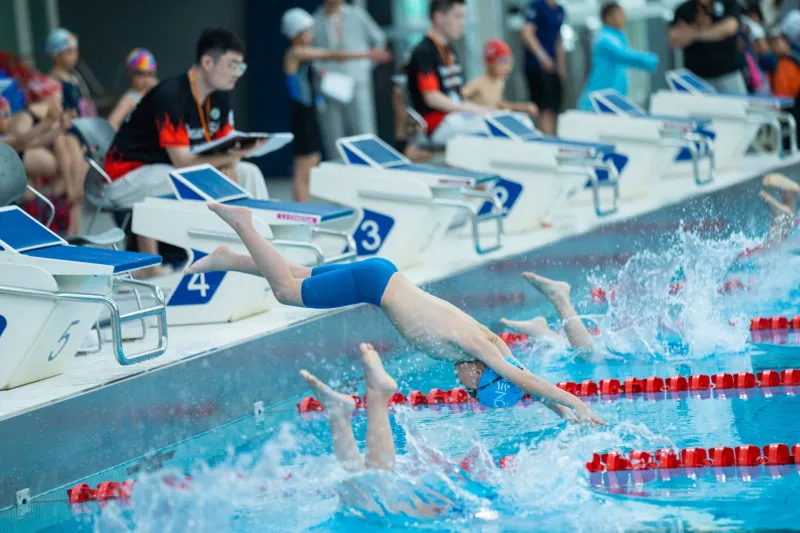
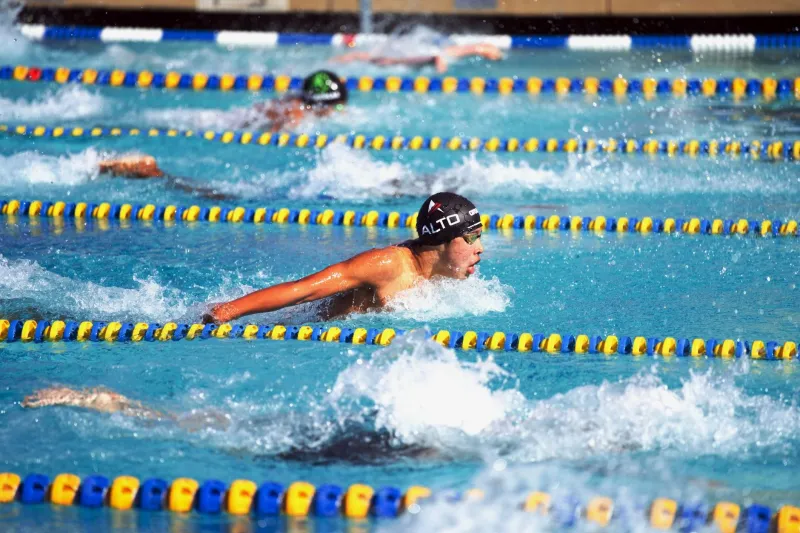
Then race day comes, a body launches into the lane next to yours, and somewhere around the 75-meter mark your brain does something weird — it freezes, second-guesses, and starts making decisions it has never had to make before. You touch the wall at 1:56. Maybe 1:57. And you're standing there dripping, wondering how a number you've hit a hundred times in practice just evaporated under the lights.
Here's the uncomfortable truth: the clock is a terrible racing partner. And if it's the only thing you've been competing against, you've been training a version of yourself that doesn't actually exist in competitive swimming.
The Clock Doesn't Fight Back
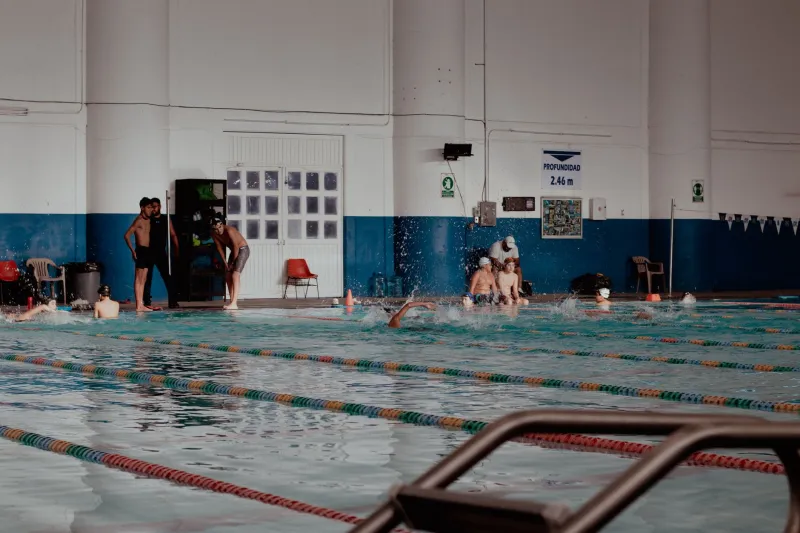
When you race a clock, the environment is entirely predictable. You control the pace, the breathing pattern, the decision to push or hold. The clock never surges at the 50, never drafts off your hip, never forces you to abandon your race plan because someone else's split just blew past your target.
What you're building in those solo sets is what sports psychologists call a closed-loop competitive model — a mental framework where the only feedback that matters comes from internal cues. Your perceived effort, your stroke count, your split time at the turn. It's a clean, quiet system. And it works beautifully in practice.
Real racing is an open-loop environment. The inputs are chaotic. A competitor goes out faster than expected and now your brain is processing a threat it has never trained to handle. Do you go with them? Do you stick to your split? Is that gap closeable or are you about to blow up chasing someone who's sandbagging the first 50? These aren't technical questions — they're instinctual ones. And instincts only develop through repetition in the actual conditions that demand them.
If you've spent months racing a ghost, you're not ready for a body.
The Decision-Making Gap Nobody Talks About
Elite swimmers make dozens of micro-decisions during a race. When to shift gears. When to hold form versus when to let it get ugly and just fight. Whether the competitor in lane four is fading or surging. These decisions happen in fractions of seconds and they're mostly subconscious — pattern recognition built from thousands of head-to-head reps.
Swimmers who train predominantly solo don't build that library. They build a different one. Their brain gets really, really good at executing a predetermined script. Which is great — right up until something breaks the script. And in competitive swimming, something almost always breaks the script.
This is especially true at the youth and high school level in the US, where club schedules often mean swimmers are grinding solo sets six days a week but only racing a handful of times per season. The performance gap between practice and competition isn't a fitness problem. It's a psychological infrastructure problem.
You Can Build Competitive Instincts Without a Meet
The good news is you don't need to wait for the next invitational to start developing real racing psychology. You can simulate the pressure dynamics of head-to-head competition in almost any training environment — if you're intentional about it.
Race your lane-mates, not your watch. Even in a casual practice set, designate a competitor. Tell yourself you're trying to touch the wall before the person in the next lane, regardless of what the clock says. This sounds simple, but it rewires how your brain processes effort. Suddenly you're reading external cues, making adjustments, learning to surge and respond.
Use handicap races. Give faster swimmers a head start and have them try to hold off the field. This creates the experience of being hunted — which is a completely different psychological state than leading from the front or chasing from behind. US club coaches who use this consistently report that swimmers develop a measurably better sense of race positioning over a single season.
Simulate the surge moment. Have your coach or a training partner call out a random 15-meter sprint window somewhere in the middle of a set. You don't know when it's coming. When they call it, you go — regardless of where you are in your breathing cycle or your stroke rhythm. This trains the brain to override its preset script, which is exactly what happens when a competitor makes an unexpected move at the 100-meter mark.
Practice negative-split racing against a pacer. Have a teammate set a pace you have to beat on the back half. Not the whole race — just the back half. This teaches the specific mental skill of holding back when every instinct says go, and then releasing when the moment actually demands it.
Why This Matters for Recreational Swimmers Too
Maybe you're not training for Olympic Trials. Maybe you're a masters swimmer doing your first open-water event in Lake Tahoe this summer, or a fitness swimmer who signed up for a local meet on a dare. The competitive psychology gap still applies to you — maybe more so.
Recreational swimmers often have the most rigid clock-based identities. "I'm a 35-minute mile swimmer." That number becomes the entire framework. Then they hit open water, or a crowded pool heat, and the number becomes meaningless because the environment has changed completely. Waves, contact, sighting, the guy in the orange cap who just swam over your legs — none of that is in the script.
Building even a basic competitive instinct — learning to read what's around you and respond rather than just execute — makes you a more adaptable, resilient swimmer in any context.
Stop Racing Ghosts
The clock is a tool. A useful one. But it has no ego, no tactics, no capacity to pressure you into a decision you haven't already made. Racing it is like sparring with a punching bag — great for conditioning, useless for preparing you to fight.
If your training environment is mostly solo, start deliberately injecting competition into your sets. Race your lane partner for a single length. Set up a challenge with a teammate. Let someone else's pace disrupt yours and figure out how to respond. Do this enough times and you'll stop freezing at the 75-meter mark. You'll stop making decisions based on a script that was never designed for live opponents.
The swimmers who consistently close the gap between practice splits and race splits aren't always the most talented. They're the ones whose brains have seen this situation before — the surge, the gap, the moment of doubt — and know exactly what to do next.
Build that brain. The clock can wait.