Race Day Amnesia: Why Your Flawless Practice Stroke Disappears When the Starter Beeps
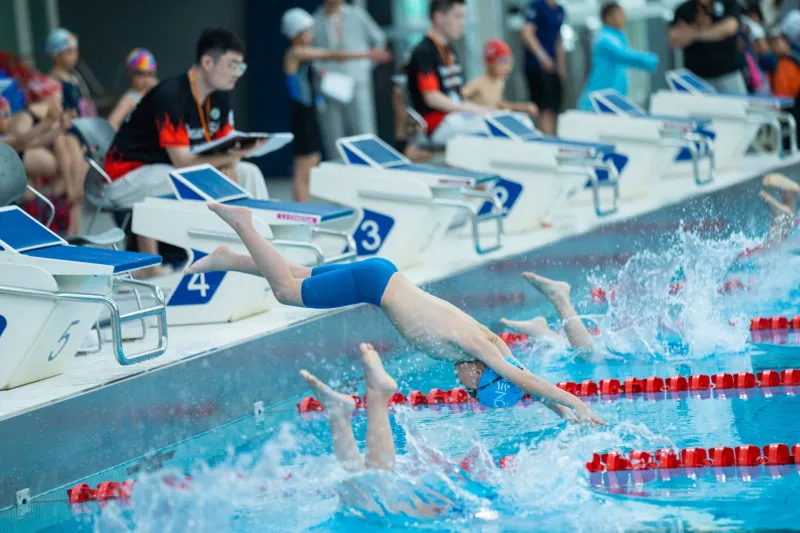
You know the feeling. You've had a killer week of practice. Your catch feels locked in, your rotation is dialed, your underwater breakouts are the best they've been all season. Your coach is nodding. You're nodding. Everything points to a breakthrough race.
Then the starter beeps.
By the 50-meter mark, your elbows are dropping, your breathing is ragged, and that smooth, controlled stroke you spent weeks building has basically left the building. You touch the wall confused, maybe a little embarrassed, and definitely frustrated.
This isn't a fitness issue. It's not bad luck. There's actually a name for what's happening — and understanding it is the first step to fixing it for good.
The Practice Environment Is Lying to You
Here's the uncomfortable truth: the pool during practice is one of the most deceptive training environments in all of sport.
When you're swimming a technique set on a Tuesday afternoon, your nervous system is calm, your cortisol is low, and your prefrontal cortex — the part of your brain responsible for conscious movement control — is fully online. You can think about your hand entry. You can feel your hip rotation. You can self-correct in real time.
That's not a bad thing. That's how you build motor patterns in the first place. The problem is that most swimmers stop there. They assume that because the movement feels right at 75% effort in a quiet pool, it'll hold up at 98% effort with adrenaline surging, a crowd cheering, and a rival in the next lane.
It won't. Not automatically.
When the race gun fires, your sympathetic nervous system kicks into high gear. Heart rate spikes. Blood gets redirected to your working muscles. Your brain shifts from deliberate, conscious processing to reactive, survival-mode execution. The careful, thoughtful stroke you built in practice? It requires conscious attention to maintain — and that's exactly the cognitive resource your brain is now rationing.
Why Stress Exposes the Cracks
Think of your technique like a structure. In calm conditions, even a poorly built structure looks fine. It's when the pressure hits — wind, weight, vibration — that the weak points show up.
Physiologically, high-intensity competition fatigue accelerates technique breakdown in predictable ways. The first thing to go is usually the catch. Shoulder stabilizers fatigue faster than primary movers, so that high-elbow position you practiced collapses under load. Next, breathing patterns get rushed — swimmers start lifting their heads instead of rotating, which tanks body position and creates drag at exactly the wrong moment. Kick timing falls apart. Turnover gets frantic.
None of this is character weakness. It's biomechanics under duress. But here's the thing — you can train for it.
Building Race-Proof Technique
Elite swimmers don't just practice good technique. They practice good technique under stress. There's a difference, and it matters.
Threshold Technique Sets The most effective way to expose your technical weaknesses before race day is to intentionally swim at race-pace intensity during practice — not just near it. Try this: swim 4x100 at actual race pace with 20 seconds rest. Have a coach or training partner watch specifically for what breaks down in the back half of each rep. Not what looks good. What falls apart. That's your training target.
The Fatigue Drill Protocol Do a hard aerobic set — something that genuinely taxes you. Then immediately swim a 50 or 75 focusing on one specific technical cue. The goal isn't to swim fast. The goal is to hold your form when your body is screaming at you to abandon it. This trains your nervous system to execute under physiological stress, which is exactly what competition demands.
Simulated Race Environments This one sounds obvious, but most age-group and Masters swimmers rarely do it. Occasionally, practice needs to feel like a meet. That means racing a teammate, using a clock with real stakes attached, or swimming in a crowded lane during a chaotic set. The more your nervous system has experienced competitive arousal in a training context, the less disruptive it becomes on race day.
The Mental Framework That Changes Everything
Beyond the physical drills, there's a cognitive shift that separates swimmers who perform in competition from those who only perform in practice.
Most swimmers think about technique as something they execute. Elite swimmers think about it as something they anchor.
The distinction matters. Execution requires constant conscious attention — which, as we've established, is a limited resource under stress. Anchoring means you've pre-selected one or two simple, physical cues that act as reset points when things start to unravel. Not a checklist. A lifeline.
Maybe it's "long neck" to fix your head position. Maybe it's "early catch" to stop your elbows from collapsing. The specific cue is less important than the fact that you've practiced using it under pressure, so it becomes automatic when you need it most.
Sports psychology research consistently shows that performance under pressure is most stable when athletes use process-focused cues rather than outcome-focused thinking. Telling yourself "don't drop your elbow" mid-race is cognitively expensive and often counterproductive. A single tactile cue — something you can feel, not just think — is far more reliable.
The Confidence Trap
There's one more thing worth naming: false confidence.
When practice goes really well for a sustained period, it's easy to assume you've "figured it out." You feel ready. Your teammates are impressed. Your times in training are promising. And that confidence, while motivating, can actually make you less likely to stress-test your technique before the meet.
You stop doing the hard, uncomfortable sets that expose your weaknesses because everything already feels so good. And then race day shows up and reminds you that comfort in practice is not the same as durability under competition pressure.
The best swimmers in the country — the ones tearing it up at NCAAs, at Masters nationals, at open water events across the US — aren't just technically sound. They're technically resilient. They've been broken down in practice enough times to know exactly where their stroke starts to fray, and they've built specific habits to counteract it.
Close the Gap Before the Meet Does It For You
Your technique doesn't vanish on race day because you're mentally weak or physically unprepared. It vanishes because the environment changed and your training didn't account for that change.
The fix isn't more yardage. It's smarter yardage. It's intentionally creating the conditions in practice that will reveal your technical vulnerabilities — and then doing the work to shore them up before a scoreboard is involved.
The pool doesn't lie. But it'll only tell you the truth if you're willing to ask the hard questions before race day asks them for you.