The Developmental Clock: Why Certain Years in a Swimmer's Career Define Everything That Follows
Every parent watching their kid tear up a summer league meet has the same quiet hope: Is this one going to be special? And every age group coach has felt the particular sting of watching a gifted 12-year-old burn out by 16, or a seemingly average 14-year-old quietly become a Division I recruit by senior year.
What separates those two trajectories isn't always talent. It's timing — specifically, whether the people guiding a swimmer's development understood what each phase of growth actually demands, and responded accordingly.
Sports science has been building a clearer picture of this for years. There are critical developmental windows in competitive swimming where training decisions carry outsized consequences. Miss them, and you're not just leaving performance on the table — you may be permanently limiting what an athlete can become.
The Early Years: Building the Engine Without Burning It Out (Ages 8–12)
Let's start with the phase that gets the most wrong.
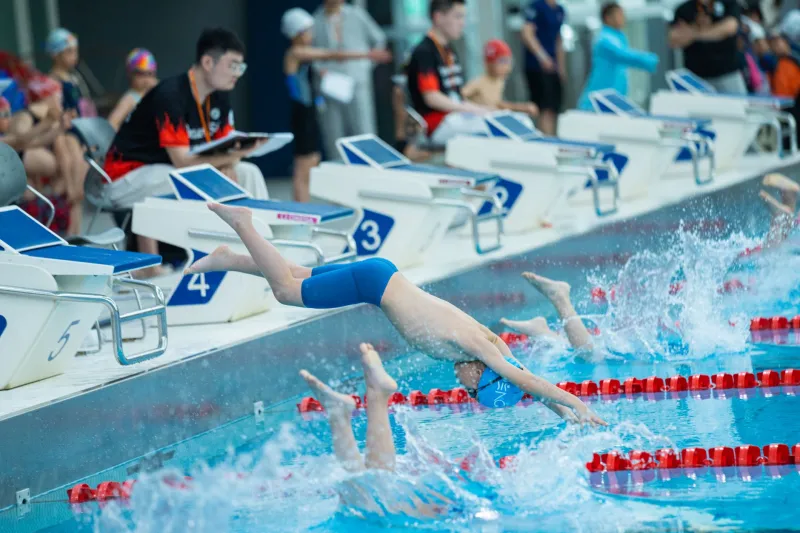
In the US youth swimming culture, the pressure to specialize early is real. Club programs are competing for rankings. Parents are comparing AAA cut sheets. And kids who show early physical gifts get pushed toward volume and intensity before their nervous systems are actually ready for it.
Here's the problem: early-maturing swimmers often dominate at 10 and 11 years old simply because they're bigger and stronger than their peers — not because they're more talented. When those late-developing kids catch up physically at 14 or 15, the early specialist frequently has nowhere to go. Their technique is entrenched. Their motivation is depleted. And their bodies have been under chronic load for years without the structural development to support it.
The science on Long-Term Athlete Development (LTAD) is pretty clear: the 8-to-12 window is for building aerobic base, developing movement literacy, and creating a love of the sport. Technical refinement during this phase has enormous returns. Early specialization in yardage and race-specific intensity does not.
If a 10-year-old is swimming 20,000 yards a week, someone is making a mistake.
The First Critical Window: Early Adolescence (Ages 12–15)
This is where the developmental clock gets serious.
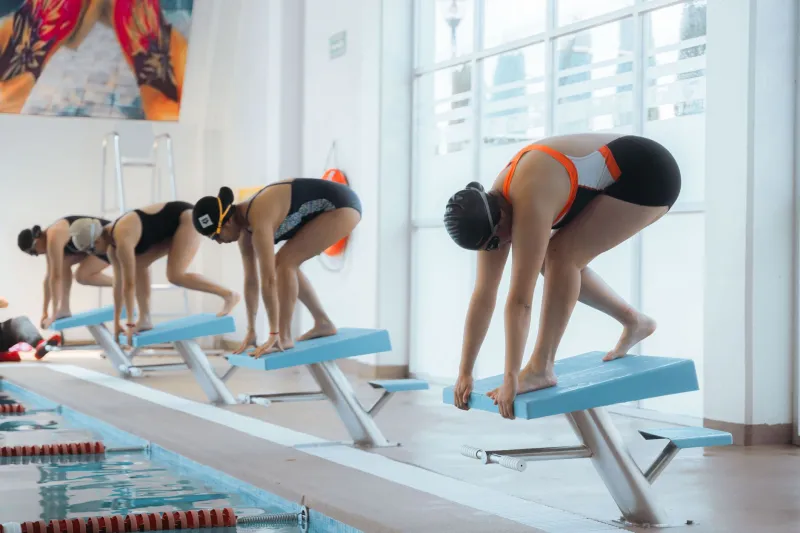
For most swimmers, early adolescence is the first genuine window where training quality can begin to differentiate long-term trajectories. Physiologically, this phase brings rapid changes in hormonal profiles, bone density, and neuromuscular coordination. It's also, critically, the window where the brain is most plastic for skill acquisition.
Coaches who understand this use the 12-to-15 range to lock in the technical and tactical foundations that will carry an athlete for the rest of their career. Stroke mechanics, underwater work, race strategy, and the mental habits around competition — these things are dramatically easier to install during this window than they will be at 17 or 19.
What kills swimmers at this stage? Two things.
First, the volume trap. Programs that respond to pubescent growth spurts by simply adding yardage without addressing the technical disruptions that growth causes. When a kid grows three inches in a summer, their stroke falls apart. That's normal. The answer is technical recalibration, not more meters.
Second, the comparison trap. Thirteen-year-olds who are late developers often get deprioritized in training groups because their times don't reflect their potential. If your program is structuring training groups around current performance rather than developmental stage, you're probably losing future elite swimmers to discouragement.
The Make-or-Break Window: Mid-Adolescence (Ages 15–18)
If the 12-to-15 phase builds the foundation, the 15-to-18 window is where the structure goes up — and where the most catastrophic mistakes happen.
This is the phase where genuine performance gains start to arrive. Post-pubescent male swimmers experience significant strength increases. Female swimmers who navigated early adolescence without burning out hit their technical peak. Aerobic capacity responds more dramatically to training load. And perhaps most importantly, cognitive development enables athletes to engage with tactical and psychological complexity in ways they simply couldn't at 13.
The swimmers who break through during this window share a few common traits. They've maintained consistent training without major injury. They have coaches who have progressively increased intensity while protecting technical quality. And they've developed a competitive identity — an internal narrative about who they are as an athlete — that fuels self-directed work.
The swimmers who plateau here? Often the opposite story. Chronic overtraining from earlier phases has left them carrying accumulated fatigue and nagging injuries. Or they peaked early on natural talent and never developed the training discipline required at higher intensity. Or — and this one is underappreciated — they never built the mental performance skills to compete under pressure, so every high-stakes meet becomes a ceiling instead of a launchpad.
Parents and coaches: if a swimmer is 16 and dreading competition rather than chasing it, that's not a personality trait. It's a trainable skill gap that needs direct attention right now.
The Transition Nobody Talks About: Late Adolescence to Young Adult (Ages 18–22)
College swimming in America creates a unique developmental context that doesn't exist in most other countries. The NCAA system provides structured training, elite coaching, and competitive infrastructure during precisely the years when the body is reaching full physiological maturity.
But it also creates a common failure pattern: the swimmer who was elite at 17 and mediocre by sophomore year.
The transition from club to college swimming demands more than just physical adaptation to higher training loads. It requires a psychological shift from externally-driven motivation — parental investment, club team identity, coach relationships — to internally-driven motivation. Athletes who haven't made that shift yet often struggle when the novelty of college competition fades and the daily grind of a college program sets in.
The athletes who continue developing through this window are the ones who've learned to train for themselves. They've internalized what performance feels like, what recovery requires, and what it means to invest in a process rather than just chase a result.
What Coaches and Parents Can Actually Do
Understanding these windows is only useful if it changes behavior. Here's the practical takeaway.
For coaches: map your training progressions to developmental stage, not just chronological age or current times. Protect technical quality during growth spurts. Build mental performance skills explicitly, not accidentally.
For parents: resist the urge to benchmark your 12-year-old against national rankings. The swimmers dominating those lists right now are not necessarily the ones who will be competing at the highest levels in five years. Your job is to support the process, not accelerate the timeline.
For athletes: the window you're in right now matters. What you build — technically, physically, mentally — during these years is the foundation everything else gets built on. Treat it accordingly.
The developmental clock doesn't stop. But if you know what time it is, you've got a real shot at making every season count.