You Already Peaked — Just Not When It Counted
There's a particular kind of frustration that doesn't get talked about enough in competitive swimming. It's not the frustration of a bad swim. It's the frustration of a great swim — just at the wrong meet, in the wrong month, with nothing important on the line.
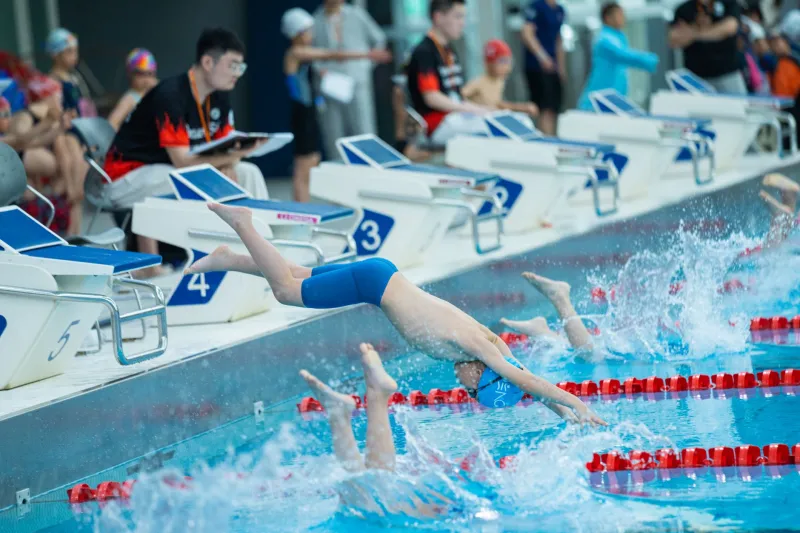
You drop a personal best at a dual meet in late January. The crowd's small, the timing system is questionable, and your coach gives you a nod that says nice, but don't read too much into it. Then March rolls around — the conference championship, the state meet, the qualifier you've been circling on your calendar since September — and your body just doesn't have the same gear. The splits don't lie. You already gave it everything. You just gave it to the wrong race.
This is premature peaking, and it's more common than most swimmers realize.
What's Actually Happening in Your Body
Peaking isn't magic. It's physiology. When your training load drops, your body — which has been quietly accumulating fatigue underneath a layer of fitness — finally gets the chance to express what it's built. Muscle tissue repairs more fully. Nervous system response sharpens. Stroke efficiency climbs. You feel fast because you are fast, at least relative to where you were six weeks ago.
The problem is that process can be triggered at the wrong time. Race too frequently early in the season, reduce volume before an unimportant meet, or let the competitive calendar dictate your training rhythm instead of your target race, and you can accidentally trigger a performance peak weeks before you need it.
From a periodization standpoint, your body has a limited number of times it can cycle through hard loading and full recovery in a single season. If you burn one of those cycles on a mid-January invitational, you're essentially spending money you needed for rent.
Signs You're Peaking Too Early
The tricky part is that premature peaking feels good in the moment. That's what makes it so dangerous. Here are some signs worth paying attention to:
You're dropping significant time at non-championship meets. A tenth here and there is normal progression. But if you're going best times by half a second or more at early-season invitationals, your body may be responding to a taper-like stimulus before you've planned one.
Your energy levels spike, then crash. That electric feeling in the water — where everything clicks and the pace feels effortless — can be a sign your nervous system is fully recovered. If it shows up in December, it probably won't show up again in March without serious recalibration.
You're racing too frequently. The more often you race, the more often your coach (or you) feels pressure to back off training beforehand. Those mini-tapers add up. Each one nudges your body toward a performance expression it wasn't supposed to reach yet.
Your best practices are happening earlier than expected. Training times are a useful proxy. If you're hitting your projected championship-pace splits in workout by early February, your fitness may have arrived ahead of schedule.
The Psychological Cost Nobody Talks About
Beyond the physiology, there's a mental toll to peaking early that doesn't get nearly enough attention.
When you go your best time at a meet that doesn't matter, you don't just lose a performance opportunity — you lose a reference point. That best time becomes the new benchmark your brain measures everything against. Walk up to the blocks at your state championship and your nervous system is quietly doing math: Last time I felt this ready, I went 1:48. I haven't felt that ready since. What if I can't get back there?
That's a psychological weight that compounds as the season progresses. Athletes who peak early often spend the back half of the season chasing a feeling rather than building toward one. Confidence erodes. Training sessions start to feel like damage control. The joy of swimming gets replaced by the anxiety of trying to recreate something that already happened.
It's a pattern coaches at the college and elite club level see constantly, especially with younger athletes who haven't yet learned to manage their competitive calendar with the same intentionality they bring to their stroke mechanics.
Recalibrating Your Season Before It's Too Late
If you recognize yourself in any of this, the good news is that premature peaking isn't a death sentence for your season. But it does require an honest conversation with your coach and a willingness to restructure some things.
Audit your race schedule. Look at every meet between now and your target championship. Ask yourself which ones actually require you to be fast versus which ones you're attending out of habit, obligation, or FOMO. Eliminating one or two early-season races can give your training blocks the uninterrupted loading they need.
Stop mini-tapering for unimportant meets. This one is hard, especially if you're competitive by nature. But showing up to a dual meet slightly fatigued and swimming a 1:52 instead of a 1:49 is not a failure. It's a feature. You're protecting something more valuable down the road.
Reload deliberately. If you've already peaked early, you may need to go back into a hard training block — even if it means your times temporarily regress. This is called a reload phase, and while it's psychologically brutal, it gives your body something to taper from when your championship meet actually arrives.
Work backward from your goal race. Periodization isn't complicated in concept: figure out when you need to be fast, then count backward to determine when your hardest training should happen, when your volume should start dropping, and when your race-pace work should sharpen. Most swimmers do this in reverse — they train hard until they feel ready, then wonder why they peaked in February.
Communicate with your coach about perceived readiness. If you're feeling unusually sharp in practice weeks before you're supposed to, say something. A good coach would rather adjust the plan than watch you waste your best performance on a meet that doesn't count.
Timing Is the Sport Within the Sport
Swimming is obsessed with tenths of seconds in the water. But the timing that actually determines whether you win or lose often happens months earlier — in how you structure your season, how often you race, and whether your best performance is pointed at the right target.
Dropping a personal best in January is satisfying. Dropping one at conference championships in March, when the seeds are set and the heat sheets matter, is something else entirely.
The goal isn't to swim fast. It's to swim fast then. Build your season like you mean it.