Loose Hands, Fast Swimmer: The Counterintuitive Truth About Hand Tension in the Water
The Moment Your Hands Betray You
Picture this: you're fifty meters into your race, lungs starting to burn, the swimmer in the next lane creeping into your peripheral vision. Without even realizing it, your hands tighten. Your fingers press together like you're trying to squeeze water out of a sponge. It feels powerful. It feels controlled. It feels like you're fighting harder.
It's actually one of the most efficient ways to bleed speed.
Hand tension under pressure is one of the most common — and least talked about — mechanical breakdowns in competitive swimming. It happens at every level, from age groupers at a Saturday morning meet to seasoned club swimmers who've logged thousands of yards in practice. The problem isn't effort. The problem is that your nervous system is doing something very human, and very wrong, at exactly the wrong time.
What's Actually Happening When You Tighten Up
When stress or fatigue kicks in, your body defaults to a primal response: grip harder, brace more, generate more force. It's wired into us. In most athletic contexts, that instinct makes some sense. In water, it creates a cascade of problems.
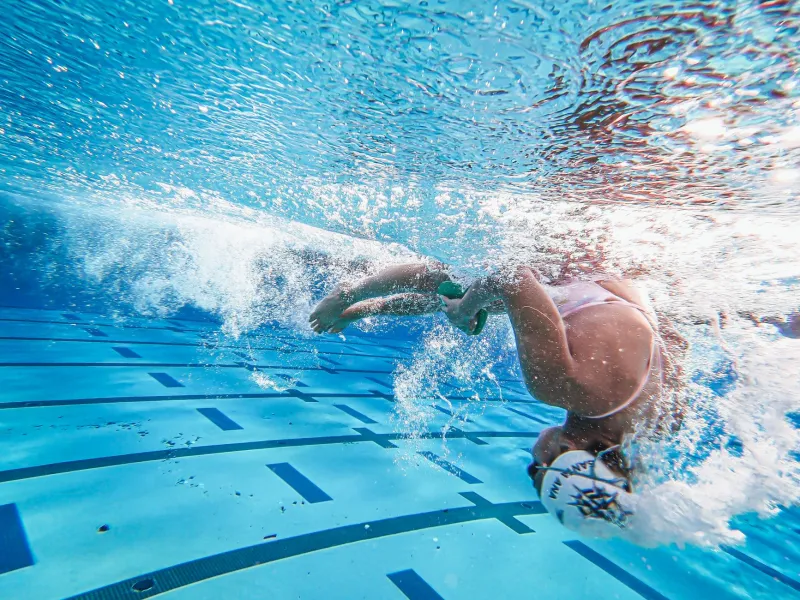
First, let's talk about what your hand actually does during a stroke. The catch and pull phase works best when your hand enters the water with controlled relaxed extension, fingers slightly apart — not clamped shut, not splayed wide open. Research in competitive swimming biomechanics consistently shows that a small gap between fingers (roughly 2–4 millimeters) can actually improve propulsive force compared to a tightly pressed hand, because it creates a more effective pressure differential across the palm surface.
When you clench, a few things go sideways simultaneously. The increased muscle tension in your forearm and hand travels up the kinetic chain, stiffening your wrist and restricting the natural flex that makes a high-elbow catch possible. Your entry angle changes. Your catch depth shifts. And all of that ripples backward through your pull, your hip rotation, and ultimately your kick timing. One tight fist can quietly scramble your entire stroke pattern.
There's also a fatigue tax. Sustained grip tension burns through your forearm muscles faster than a relaxed hand would. Those muscles aren't your primary propulsion engines — your lats and core are — but when they're cramping up by the back half of a race, your pull mechanics suffer anyway.
Why Elite Swimmers Look So Effortless (Even When They're Not)
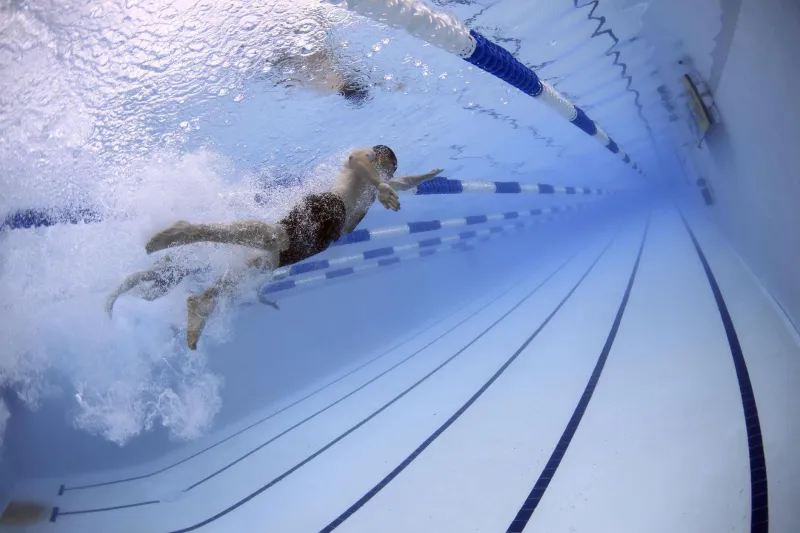
Watch high-level swimmers on race footage — not the highlight clips, but the actual underwater camera angles. Pay attention to their hands during the final 25 yards when everything else is maxing out. You'll notice something that looks almost casual: their fingers stay soft, their wrists stay fluid, and their hand entry looks almost identical to what it did in the first lap.
That's not talent. That's trained behavior.
Elite swimmers don't escape the pressure-tension reflex — they've just built enough proprioceptive awareness to catch it early and override it. They've spent time specifically training what coaches sometimes call "relaxed intensity" — the ability to generate maximum output without letting tension creep into the parts of the body that don't need it. Your hands are a big part of that equation.
The goal isn't limp, passive hands. It's what some coaches describe as "soft power" — fingers that move through the water with intentional looseness while the real force comes from your back, shoulders, and core doing the actual work.
Dryland Resets: Training Your Grip Reflex Before You Hit the Pool
The good news is that grip tension is trainable. Your nervous system can learn new defaults, especially when you practice them consistently in low-stakes environments before expecting them to show up under race conditions.
Shake-Out Drills: Before any swim session, spend 30 seconds loosely shaking out your hands and wrists — like you're flicking water off your fingertips. This sounds stupidly simple, but it primes your forearms to start in a relaxed state and gives your nervous system a physical cue to associate with "loose hands mode."
Tension-Release Awareness Work: Sit down, make a tight fist for five seconds, then let go completely. Notice the difference. Do this a few times and try to memorize what the released state feels like in your forearm and palm. You're building a sensory reference point you can call up mid-swim.
Visualization with a Tactile Anchor: During dry-land visualization sessions — and you should be doing these — mentally rehearse your race with specific attention to your hands staying soft through the final sprint. Some swimmers hold a small foam ball loosely during this exercise to maintain a physical reminder of what "not gripping" feels like.
In-Water Fixes That Actually Stick
The Ghost Hand Drill: Swim a 50 at moderate effort focusing exclusively on entering each hand as if it weighs almost nothing — like you're placing it on a surface rather than driving it into the water. Exaggerate the softness. You'll feel a little strange at first, but your catch mechanics will often improve immediately because you're eliminating the entry tension that was restricting your shoulder rotation.
Check-In Sets: During longer sets, build in a mental check-in every 25 yards: "How tight are my hands right now?" Just asking the question is often enough to release tension you didn't know was there. Do this enough and it becomes automatic.
Fatigue-State Practice: Here's the uncomfortable one. You need to practice relaxed hands when you're already tired, because that's when the tension reflex is strongest. Build a set where the final 25 of each repeat is specifically focused on hand softness — not speed, not split times, just loose fingers and fluid entry. Teaching your body to stay relaxed under metabolic stress is the whole point.
One Small Change, Real Results
Nobody's going to drop a second just by unclenching their fist. But that's not really the point. Hand tension is a symptom of a larger mechanical breakdown that happens when swimmers let stress override technique. When you address it, you're not just fixing your hands — you're building the kind of body awareness that keeps your whole stroke together when everything gets hard.
And in competitive swimming, the athlete who holds their mechanics the longest in a race almost always wins the split that matters most.
Loosen up. The water responds to finesse, not force.