Ditch the Clarity: The Surprising Reason Elite Swimmers Train Half-Blind
Here's something nobody at your last swim meet talked about: the goggles you're obsessing over — the ones with the ultra-wide lens, the anti-fog coating, the UV protection, the perfect seal — might be quietly making you a worse swimmer.
Not in every situation. Not in a way you'd notice on a casual Tuesday practice. But during underwater phases? During breakouts and turns? The science is starting to suggest that pristine visual clarity could be trading away something far more valuable: your body's ability to feel exactly where it is in the water.
This is the goggle paradox, and once you understand it, you'll never think about sensory training the same way again.
What Proprioception Actually Does for a Swimmer
Proprioception is your body's internal GPS. It's the network of sensors in your muscles, joints, and connective tissue that tells your brain where your limbs are, how they're moving, and how much force they're producing — all without your eyes doing any of the work.
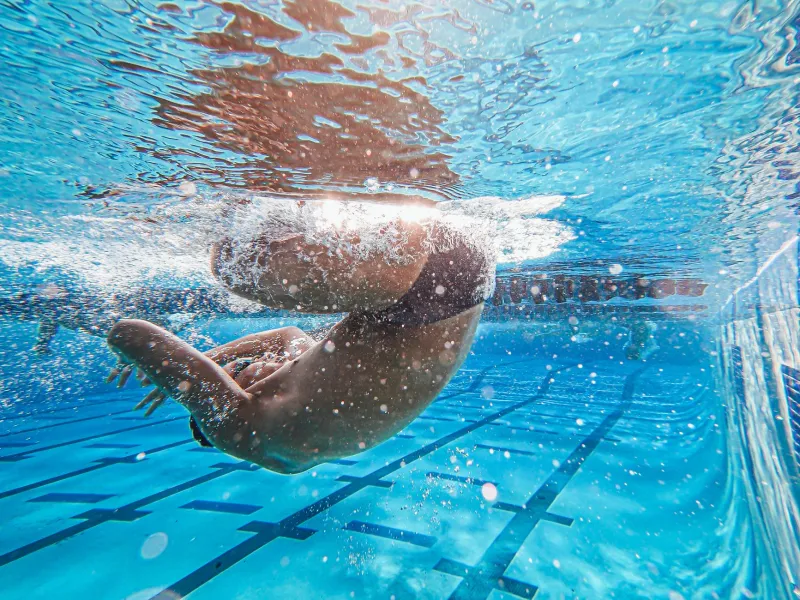
In swimming, this matters enormously. When you're pushing off the wall into a streamline, you can't see your hip alignment. You can't see whether your ankles are stacked or your shoulders are rotating out. You have to feel it. And that feeling — that internal feedback system — is what separates a swimmer who guesses at their underwater body position from one who owns it.
Here's where it gets interesting. Research on sensory trade-offs in athletic performance has shown that when one sensory input dominates, others tend to downregulate. In plain terms: the more your brain leans on your eyes, the less it needs to listen to your body. Neuroscientists call this cross-modal competition, and it shows up across sports from gymnastics to basketball.
For swimmers, especially during the underwater phase where vision provides very little useful environmental information anyway, an over-dependence on visual clarity can literally dull the proprioceptive signals your nervous system should be amplifying.
The Coach's Perspective: Intentional Limitation
Elite coaches at the club and collegiate level in the US have been quietly experimenting with visual limitation drills for years. The concept isn't new — sighted athletes in other sports have trained blindfolded for decades — but applying it systematically to swimming is gaining traction.
The basic premise: if you remove or reduce visual input during certain training segments, you force the nervous system to compensate by sharpening proprioceptive awareness. Swimmers start noticing things they never noticed before. A slight hip drop on the third kick cycle. An asymmetrical shoulder during the breakout pull. The exact moment their streamline starts to lose tension.
Some coaches use blacked-out or heavily fogged goggles for specific drill sets. Others have athletes close their eyes during underwater work — which sounds simple but is remarkably uncomfortable the first few times you try it. That discomfort is the point. It's your nervous system being asked to do a job it's been outsourcing to your eyes for years.
The results, anecdotally and in emerging research, are striking. Swimmers who complete regular visual limitation training often report a dramatically improved sense of body position, faster correction of technical errors mid-race, and better consistency in their underwater work across a full race when fatigue starts to compromise everything.
Why Clarity Feels Good But Isn't Always Helpful
Let's be honest about something. Putting on a great pair of goggles and seeing the lane lines crisp and sharp feels good. It feels like control. It feels like you're ready to perform.
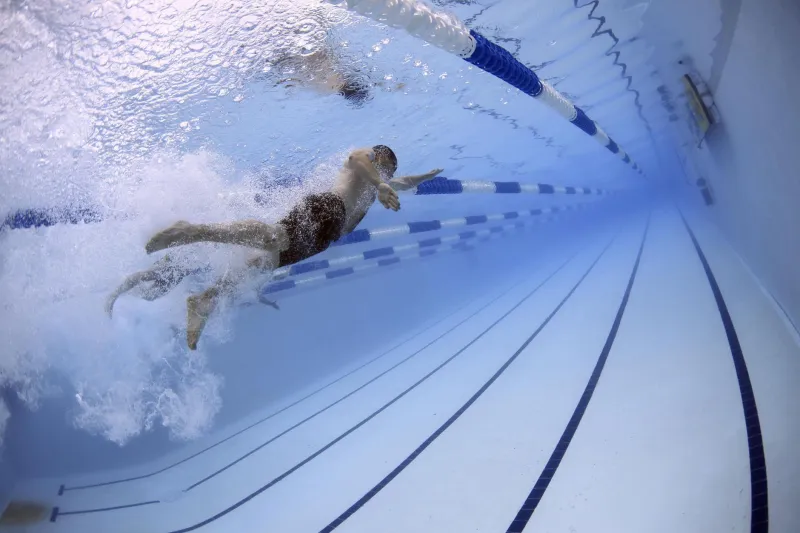
But during the underwater phase — those critical meters off every wall — what exactly are you seeing? The bottom of the pool. Maybe a shadow. Possibly another swimmer's feet if you're in a close race. None of that information is helping you swim faster. Your brain is still processing it, though, and it's doing so at the expense of the internal signals that actually matter.
There's also a psychological dependency at play. Swimmers who have always trained with maximum visual clarity often report feeling genuinely unsettled when they practice with reduced visibility. That unsettled feeling is data. It tells you how much of your spatial confidence is coming from external input rather than internalized feel.
How to Start Training Your Sensory System
You don't need to throw out your favorite goggles or do entire practices blind. This is about targeted, intentional exposure to reduced visual input during the moments when proprioception should be running the show anyway.
Start with closed-eye push-offs. After every turn in practice, close your eyes for the entire underwater phase. Focus on feeling your streamline, your kick rhythm, and the moment you choose to surface. Do this for two weeks before adding anything else.
Add fogged or obscured goggle work. A thin layer of petroleum jelly on the inside of your lenses creates a blurred effect without completely removing visual input. Use these for drill sets focused on underwater body position.
Film yourself. This one seems counterintuitive given the whole theme here, but reviewing your underwater footage immediately after visual limitation sets gives your brain a way to connect what you felt to what actually happened. Over time, the gap between the two narrows.
Build in feedback check-ins. After each underwater set, pause and describe — out loud or in a training journal — what you felt. Where was the tension in your streamline? When did your kick feel most powerful? Verbalizing proprioceptive feedback accelerates its integration.
The Bigger Picture
Swimming is one of the rare sports where athletes spend significant time in an environment that actively limits useful visual input. The water distorts, the goggles fog, the angles are wrong. The best swimmers in the world aren't great because they see better underwater. They're great because they feel better underwater.
That feel is trainable. It's a skill, not a talent. And ironically, the first step to developing it might be learning to trust your body over your eyes — even when your goggles are giving you the clearest view in the pool.
Train harder. Swim faster. Sometimes, that means seeing a little less.