Stuck in the Same Lane: The Real Reasons Your Swimming Isn't Getting Faster
The Plateau Is Not the Problem
Every competitive swimmer hits that wall eventually. You've been grinding through your sets, your yardage is up, your coach hasn't changed much — and somehow your times are exactly where they were six months ago. Maybe even a little slower. It feels like hitting a ceiling made of chlorinated water and sheer stubbornness.
But here's the thing: a plateau isn't a dead end. It's diagnostic information. Your nervous system, your muscles, and your movement patterns are all trying to tell you something. The trick is learning how to listen — and then responding with the right fix instead of just adding more volume and hoping for the best.
Let's break down exactly what's happening under the surface.
Why Your Body Stops Responding
When you first started training seriously, improvement felt almost automatic. That's because your early gains were largely neurological. Your brain was building new motor pathways, learning how to fire muscles in the right sequence, and getting more efficient at coordinating the complex movement chain that makes up a competitive stroke. Those wins come fast and feel amazing.
But once those pathways are established, the easy neurological gains dry up. Now your body has to make harder, more specific adaptations — and that's where most swimmers get stuck.
There are three primary plateau types worth knowing:
The Neuromuscular Rut — Your stroke pattern has been grooved so deeply through repetition that your nervous system defaults to it automatically, even when it's slightly inefficient. You're not getting worse; you're just locked into a ceiling set by your current motor program.
The Physiological Ceiling — Your aerobic base, lactate threshold, or muscular power has maxed out relative to your current training stimulus. The body has fully adapted to your workload and sees no reason to keep improving.
The Mechanical Leak — A subtle flaw in stroke mechanics — a dropped elbow during the catch, early breathing rotation, a crossover in the pull — is costing you propulsion or adding drag, and no amount of fitness will overcome it.
Identifying which type you're dealing with changes everything about how you approach the fix.
Reading the Signs
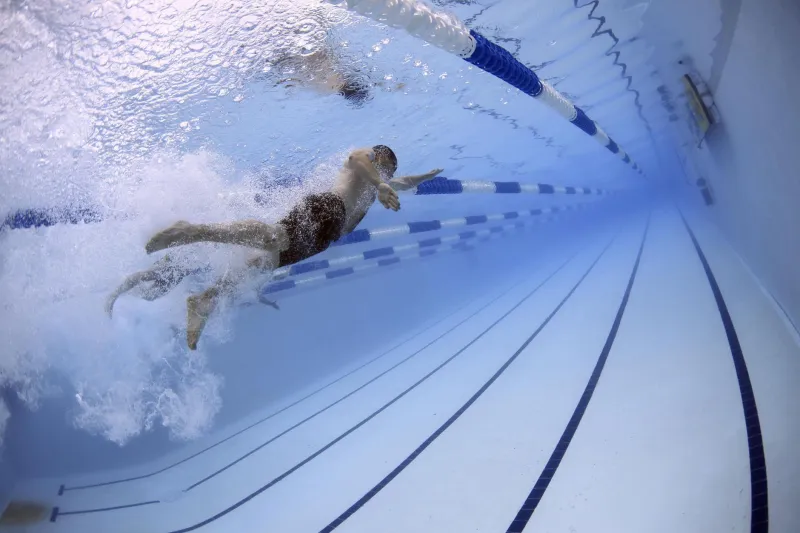
So how do you figure out which plateau you're facing? Start with video. Underwater footage is the single most underused tool in age group and high school swimming. Most coaches and athletes are working from feel alone, which is notoriously unreliable. A side-angle and front-angle underwater shot of your race-pace stroke will reveal mechanical leaks that feel completely invisible from the surface.
If the video looks clean and your stroke is technically sound, the issue is likely physiological. Pull your training log. Has your yardage been consistent for more than eight to ten weeks without a significant overload cycle? Have you been doing the same intervals at the same rest? That's a recipe for stagnation.
If you're noticing that your times hold up in shorter, fresher efforts but fall apart in race simulations or longer sets, that's often a lactate threshold issue — your body is producing lactic acid faster than it can clear it, and your current training isn't pushing that ceiling higher.
Micro-Adjustments That Actually Move the Needle
Once you've diagnosed the plateau type, here's where you get to work.
For the Neuromuscular Rut: Deliberately disrupt your pattern. Constraint-based drills are powerful here — think fist swimming, fingertip drag, or using a pull buoy with a band to force your hips into better alignment. These tools remove the crutches your nervous system leans on and force it to build a new, more efficient motor program. Spend two to three weeks with a higher drill ratio in your warm-ups, even if it feels like you're going backward. You're not. You're rewriting code.
For the Physiological Ceiling: Change the training stimulus, not just the volume. If you've been doing mostly aerobic base work, introduce more threshold sets — think 10x100 on a tight interval at 85 to 90 percent effort. If you've been hammering threshold work, add a true sprint cycle: short, explosive efforts with full recovery that train your fast-twitch fibers in ways that aerobic sets simply can't reach. Periodization matters. Your body needs variety in stress to keep adapting.
For the Mechanical Leak: This one requires patience and a good eye. Once you've identified the flaw on video, isolate it with single-focus practice. Pick one technical cue per session — high elbow catch, hip-driven rotation, a tighter kick — and give it your full attention for 200 to 400 yards before reverting to full-stroke work. Trying to fix everything at once overwrites nothing.
The Dryland Connection
One piece of the plateau puzzle that gets massively underestimated is what's happening outside the water. Strength imbalances — particularly in the posterior shoulder, the hip flexors, and the core — don't just limit power. They actively distort stroke mechanics under fatigue. A weak serratus anterior, for example, can cause the scapula to wing during the catch, robbing you of a solid anchor point and leaking propulsion on every single stroke.
A targeted dryland program isn't about building bulk. It's about building the specific stability and control your stroke mechanics demand. Exercises like band pull-aparts, single-arm cable rows, and anti-rotation core work translate directly to water efficiency. If your dryland work looks like generic gym programming, that's worth reassessing.
Give It Time, Then Measure
Breaking through a plateau takes a minimum of four to six weeks of consistent, deliberate change before you'll see meaningful time drops. Resist the urge to abandon a new approach after two bad practices. The early stages of neurological reprogramming often feel awkward and slow — that's normal. You're building something new.
Time trial regularly, but not obsessively. A 200 time trial every three weeks gives you real data without the performance anxiety of constant race simulation. Track your splits, not just your finals. Often the first sign of a breakthrough shows up in a back-half split improvement before it shows up in your overall time.
The chlorine ceiling is real, but it's not permanent. Your next level of speed is already in there — it just needs the right key to unlock it.