The Last 10 Yards: Inside the Mental Edge That Separates Winners from Runners-Up
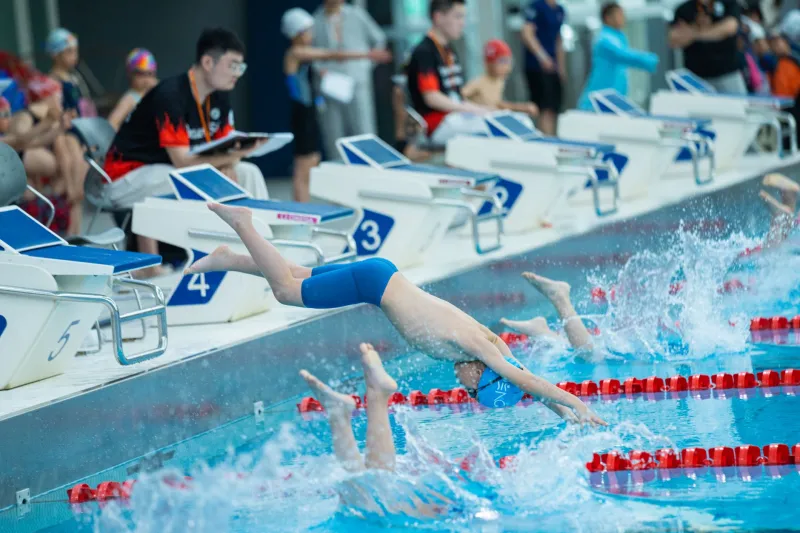
Let's be honest about something that doesn't get talked about enough in swimming circles: at the top level of this sport, almost everyone is fit. Almost everyone has put in the yards, done the dry-land work, dialed in their nutrition. By the time you're standing behind the blocks at a conference championship or a regional qualifier, physical preparation is basically table stakes.
What separates the swimmer who wins a close race from the one who finishes second by a fingertip? More often than you'd think, it's what's happening between the ears.
We dug into the psychology of competitive swimming — talking to athletes, coaches, and sports psychologists — to understand the mental tools that actually move the needle when the pressure is highest. Here's what we found.
Strategy 1: Visualization That Goes Beyond "Imagining Success"
Every swimmer has heard the advice to "visualize your race." Most of them are doing it wrong.
There's a meaningful difference between daydreaming about winning and deliberate mental rehearsal. The first feels good. The second actually works.
Dr. Priya Nambiar, a sports psychologist who works with collegiate swimmers on the East Coast, explains the distinction this way: "Effective visualization is multisensory and process-focused. You're not just seeing yourself touch the wall first — you're feeling the resistance of the water on your catch, hearing the crowd noise, experiencing the burn in your shoulders at the 150-meter mark. And you're rehearsing responses to adversity, not just a perfect race."
That last part is crucial. Elite swimmers don't just visualize going fast. They visualize what happens when things go sideways — a bad start, a slower split than planned, a competitor surging at the turn — and they rehearse staying composed and executing anyway.
Jamie, a 20-year-old Division I backstroker from the Midwest, describes her pre-race visualization routine as almost uncomfortable on purpose. "I visualize the race going hard. I visualize getting out-split at the 100. And then I visualize exactly what I do next — my stroke, my tempo, my breathing. By the time I'm actually racing, I've already been in that situation a hundred times."
Strategy 2: Pre-Race Routines as Psychological Anchors
Rituals get a bad reputation sometimes — dismissed as superstition or quirky athlete behavior. But there's real science behind why consistent pre-race routines help performance under pressure.
When your nervous system is flooded with adrenaline, familiar routines act as anchors. They signal to your brain that this is a known situation with a known response. The anxiety doesn't disappear, but it becomes manageable. Controllable.
The key word there is consistent. A pre-race routine only works if it's the same every time — same music, same warmup sequence, same mental cue words, same amount of time spent on the blocks before the starter's signal. Variance undermines the psychological benefit.
Marco, a 17-year-old club swimmer from Southern California who competes in the 100 and 200 butterfly, has a seven-minute pre-race routine he's refined over two years. "I don't care if it looks weird to people on deck. That routine puts me in the exact mental state I need. When I skip parts of it — even just because I'm running late — I can feel the difference in how I race."
Dr. Nambiar recommends building your routine backward from the start. "Work from the moment you step behind the blocks and go backward in time. What do you need in the five minutes before that? The fifteen minutes before that? Build the routine to arrive at the blocks in the state you want."
Strategy 3: Reframing Pressure Instead of Suppressing It
Here's an opinion that might ruffle some feathers: telling yourself to "calm down" before a big race is counterproductive.
Research from Harvard psychologist Alison Wood Brooks — and widely cited in sports psychology circles — suggests that trying to suppress pre-competition anxiety actually increases cognitive load and hurts performance. A better approach? Reframe the anxiety as excitement.
The physiological signatures of anxiety and excitement are nearly identical — elevated heart rate, heightened alertness, increased adrenaline. The difference is the story you tell yourself about those sensations. "I'm nervous" signals threat. "I'm fired up" signals opportunity.
This isn't toxic positivity. It's a deliberate cognitive shift that competitive swimmers can practice and strengthen over time. The goal isn't to eliminate the pre-race edge — that edge is useful. The goal is to stop fighting it.
Strategy 4: Managing the Noise During Hard Training Blocks
Mental toughness isn't just a race-day asset. It's something that gets built — or eroded — during the grind of a full training season.
November and December are notorious in the US swimming community. Yardage is high, rest is low, and the championship meets that motivated everyone in September feel very far away. This is when self-doubt gets loud. This is when swimmers start questioning whether the work is actually paying off.
Sports psychologists call this the "valley" — a predictable dip in motivation and confidence that occurs mid-season. The swimmers who come out the other side faster are the ones who've developed strategies for navigating it, not avoiding it.
One practical tool: the "evidence journal." At the end of each practice, spend two minutes writing down one concrete piece of evidence that you're improving. Not feelings — evidence. A split time that's faster than last month. A set you finished when you wanted to quit. A technical correction you held for the whole workout. Over weeks, that journal becomes a document of undeniable progress that you can return to when your brain is telling you nothing is working.
Coach Tillman, who also works with his swimmers on mental skills, puts it simply: "The best swimmers I've coached aren't the ones who never doubt themselves. They're the ones who doubt themselves and get in the water anyway."
Strategy 5: Competing Against the Process, Not the Person in the Next Lane
This one is controversial because it sounds like it contradicts competitive instinct. But hear it out.
In close races — the ones decided by fractions of a second — swimmers who fixate on their competitors almost always underperform relative to those who focus exclusively on executing their own race plan. Why? Because watching the swimmer next to you triggers reactive decision-making. You speed up when you shouldn't. You panic at a turn. You abandon the pacing strategy that your coach built the whole season around.
The mental discipline of process-focus — staying locked on your stroke, your tempo, your breathing, your walls — is something that has to be practiced in training, not just summoned on race day.
Jamie does what she calls "blind sets" in practice — intervals where she deliberately doesn't check the scoreboard or pace clock. "I'm learning to feel my pace instead of read it. So when I'm racing and I can't see the clock, I'm not guessing. I know."
The Mental Game Is a Skill, Not a Personality Trait
The biggest misconception about mental toughness in swimming is that some athletes just have it and others don't. That framing lets too many swimmers off the hook.
Mental strength is trainable. Visualization is a skill. Routine-building is a skill. Pressure reframing is a skill. Like stroke mechanics or underwater dolphins, these things improve with deliberate, consistent practice.
The swimmers who dominate close races aren't just physically superior. They've put in reps on the mental side of the sport with the same seriousness they bring to a hard interval set.
Start there. The water's waiting.