Your Body Is Lying About How Hard You're Working — Here's How to Catch It
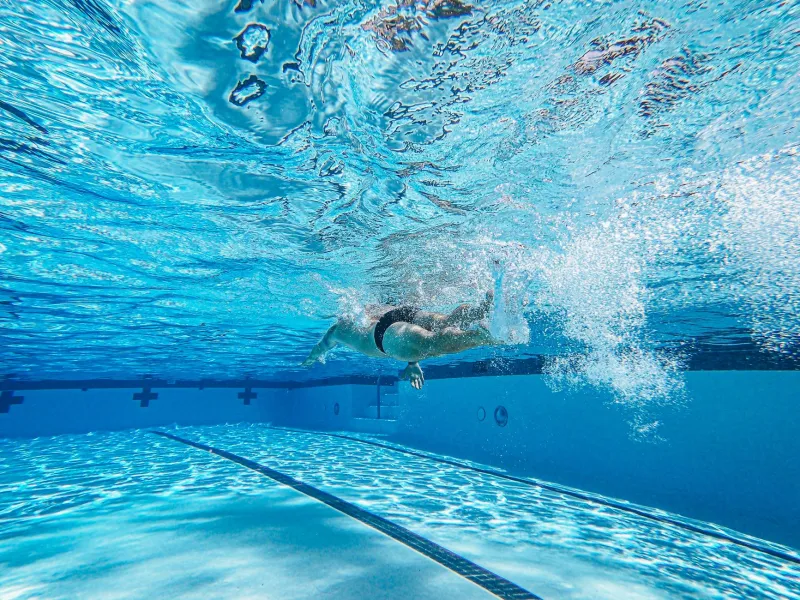
Ask most competitive swimmers what a hard effort feels like, and they'll describe it with total confidence. Burning lungs, heavy arms, a pace that feels unsustainable. They'll tell you they know when they're working at threshold — they can feel it.
Here's the uncomfortable truth: they're usually wrong. And the gap between perceived effort and actual physiological output is one of the most underappreciated performance killers in the sport.
What Lactate Actually Is (And What It Isn't)
Let's clear up the biggest misconception first. Lactate is not the thing making your muscles burn. That burning sensation is largely driven by hydrogen ion accumulation and metabolic acidosis — lactate itself is actually a fuel source your body recycles during intense exercise. The conflation of lactate with "the burn" has created decades of confusion in how swimmers talk about and train around threshold.
What lactate is, though, is an incredibly useful physiological signal. As exercise intensity rises, your body produces lactate faster than it can clear it. The point at which production starts outpacing clearance — commonly called the lactate threshold, or LT — is one of the most important markers of aerobic capacity and race-readiness in endurance-based sports, including swimming.
Train below it and you're building a base. Train at it and you're developing the engine. Train well above it repeatedly without structure and you're just accumulating fatigue while wondering why you're not getting faster.
The problem? Most swimmers have no reliable sense of where their threshold actually sits.
Why Perceived Effort Is Such a Terrible Guide
Here's where it gets genuinely fascinating. Research on rating of perceived exertion (RPE) in trained athletes consistently shows that sensation-based effort assessment drifts based on a staggering number of variables — pool temperature, time of day, sleep quality the night before, emotional state, even what you ate three hours ago.
A swimmer who trains at 6 a.m. after a rough night of sleep may perceive an effort as "very hard" that would register as "moderate" on a well-rested afternoon. Their physiology hasn't changed dramatically. Their perception has. And if they're using that perception to set training intensity, they're training at completely different physiological zones across the week without realizing it.
This is why two swimmers doing the "same" hard set can walk away with wildly different training stimuli — and why the swimmer who always feels like they're working harder isn't always the one getting faster.
The Threshold Misconception That's Everywhere
In a lot of US club and high school programs, threshold training gets reduced to a simple formula: swim at a pace that's uncomfortable but sustainable for longer efforts. That's not wrong exactly, but it's vague enough to be almost useless without calibration.
Most swimmers, when left to self-select their "threshold" pace, end up training either too easy or too hard. Too easy because discomfort is relative and humans are wired to avoid genuine suffering. Too hard because some swimmers equate maximum effort with maximum benefit and skip the zone where the real aerobic adaptations happen.
The result is a lot of swimmers spending enormous training volume in what exercise physiologists sometimes call the "black hole" — too hard to be truly aerobic, not hard enough to generate meaningful lactate-based adaptation. You're tired, you feel like you worked, and you're not getting faster. Sound familiar?
Practical Ways to Recalibrate Without a Lab
Full lactate testing requires blood draws and equipment that most club programs don't have access to. But there are practical field methods that get you meaningfully close.
The Talk Test Variation: At true aerobic threshold, most swimmers can speak in short sentences but not comfortably hold a conversation. It's a blunt tool, but it's a starting point for identifying the low end of your threshold zone during pull sets or kick sets where breathing mechanics aren't distorting the signal.
The Critical Swim Speed (CSS) Test: This is probably the most accessible threshold estimate for pool swimmers. Swim a maximal 400 and a maximal 200 on separate days with full recovery. The pace difference between those two efforts gives you a solid approximation of your lactate threshold pace per 100. Use that number to anchor your threshold training sets rather than relying on feel.
Pace-RPE Calibration Sets: Swim a series of 200s at controlled, measured paces — starting easy and stepping up by two seconds per 100 — while recording your RPE at each step. Over time, you'll build a personal map of where your perception aligns with and diverges from your actual pace. That map is gold for self-coached or low-tech training environments.
Heart Rate Anchoring: Wearable heart rate tech has gotten reliable enough for pool use that it's worth incorporating. Pairing HR data with RPE and pace across a structured set reveals patterns that perceived effort alone will never show you.
What to Do With This Information
Once you have a better sense of where your actual threshold sits, the training prescription gets a lot cleaner. Your moderate aerobic work should feel easier than you probably thought was productive. Your threshold work should feel controlled, not desperate. And your above-threshold sprint work should be brief, deliberate, and followed by genuine recovery.
The swimmers who make the most consistent progress aren't the ones who train the hardest by feel. They're the ones who train the most accurately by data — and who've learned to trust the numbers over the narrative their body keeps telling them.
Your perceived effort is a story. Lactate doesn't write stories. It just tells you what's actually happening in there.
Start listening to the right source.